

Skip to main navigation Skip to main content
  • KAPS
  • E-Submission

APS : Advances in Pediatric Surgery

OPEN ACCESS
ABOUT
BROWSE ARTICLES
EDITORIAL POLICY
FOR CONTRIBUTORS

Page Path

17
results for

"Eunyoung Jung"

Article category

Keywords

Publication year

Authors

Funded articles

"Eunyoung Jung"

Original Articles

[English]
Neuroblastoma: A 2020 Survey Conducted by the Korean Association of Pediatric Surgeons
Hee-Beom Yang, Soo Min Ahn, Min Jeng Cho, Yong-Hoon Cho, Soo Jin Na Choi, Yoon Mi Choi, Jae Hee Chung, Seok Joo Han, In Geol Ho, Jeong Hong, Kyong Ihn, Yeon Jun Jeong, Eunyoung Jung, Dae Youn Kim, Hae-Young Kim, Ki Hoon Kim, Seong Chul Kim, Soo-Hong Kim, Eun-Jung Koo, Hyun Hee Kwon, Yong Jae Kwon, Nam-Hyuk Lee, Ju Yeon Lee, Sanghoon Lee, Jung-Man Namgoong, Chaeyoun Oh, Jung-Tak Oh, Jin Young Park, Junbeom Park, Jeong-Meen Seo, Jae Ho Shin, Hyun Beak Shin, Joohyun Sim, Jiyoung Sul, Joon Kee Youn, Hyun-Young Kim
Adv Pediatr Surg 2025;31(2):66-76.   Published online November 25, 2025
DOI: https://doi.org/10.13029/aps.2025.31.2.66
Purpose
To report a nationwide survey on neuroblastoma conducted by the Korean Association of Pediatric Surgeons (KAPS) in 2020.
Methods
The clinical data of pediatric patients diagnosed with and treated for neuroblastoma from 2005 to 2019 in 19 hospitals of KAPS members were collected. Survival and prognostic factor analyses were performed using the log rank test and Cox proportional hazard analysis. A p-value <0.05 was considered significant.
Results
A total of 669 patients with neuroblastoma were registered for the study. The results were presented and discussed at the 36th annual meeting of the KAPS, which was held in Seoul on August 21, 2020.
Conclusion
This study provides information on patient demographics, prognostic outcomes, and comprehensive treatment outcomes for neuroblastoma. The study is expected to be an important reference for improving pediatric surgeons’ understanding and treatment of neuroblastoma.
  • 266 View
  • 10 Download
[English]
Perception on the Intestinal Malrotation: A 2021 Survey Conducted by the Korean Association of Pediatric Surgeons
Hee-Beom Yang, Min Jeng Cho, Yu Jeong Cho, Yoon Mi Choi, Jae Hee Chung, Seok Joo Han, Jeong Hong, Eunyoung Jung, Ki Hoon Kim, Soo-Hong Kim, Cheol-Gu Lee, Nam-Hyuk Lee, Ju Yeon Lee, Sanghoon Lee, Suk Bae Moon, Young-Hyun Na, So Hyun Nam, Chaeyoun Oh, Jin Young Park, Junbeom Park, Tae-Jin Park, Jae Ho Shin, Joonhyuk Son, Hyun-Young Kim, The Korean Association of Pediatric Surgeons
Adv Pediatr Surg 2025;31(2):59-65.   Published online August 5, 2025
DOI: https://doi.org/10.13029/aps.2025.31.2.59
Purpose
To report the findings of a perception survey on intestinal malrotation conducted by the Korean Association of Pediatric Surgeons (KAPS) in 2021.
Methods
The perceptions on intestinal malrotation regarding clinical decision making of the KAPS members were collected through web-based survey.
Results
A total of 22 surgeons were answered for this study. The results were presented and discussed at the 37th annual meeting of KAPS, which was held in Seoul on June 18, 2021.
Conclusion
This study provides the clinical decisions of the KAPS members on the intestinal malrotation. The study is expected to be an important reference for improving pediatric surgeons’ understanding and treatment of intestinal malrotation.
  • 231 View
  • 8 Download
[English]
A Comparative Study of Three National Surveys on Biliary Atresia by the Korean Association of Pediatric Surgeons
Yeon Jun Jeong, Dayoung Ko, Hyunhee Kwon, Ki Hoon Kim, Dae Yeon Kim, Soo-Hong Kim, Wontae Kim, Hae-Young Kim, Hyun Young Kim, Seong Chul Kim, Younghyun Na, Jung-Man Namgoong, So Hyun Nam, Junbeom Park, Jinyoung Park, Tae-Jun Park, Jeong-Meen Seo, Ji-Young Sul, Joonhyuk Son, Hyun Beak Shin, Joohyun Sim, Soo Min Ahn, Hee Beom Yang, Jung-Tak Oh, Chaeyoun Oh, Joong Kee Youn, Sanghoon Lee, Ju Yeon Lee, Kyong Ihn, Hye Kyung Chang, Eunyoung Jung, Jae Hee Chung, Yu Jeong Cho, Yun Mee Choe, Soo Jin Na Choi, Seok Joo Han, In Geol Ho, Ji-Won Han
Adv Pediatr Surg 2025;31(2):47-58.   Published online July 16, 2025
DOI: https://doi.org/10.13029/aps.2025.31.2.47
Purpose
Biliary atresia (BA) is a rare but progressive cholangiopathy and the leading cause of pediatric liver transplantation worldwide. The Korean Association of Pediatric Surgeons (KAPS) has conducted three national surveys (2001, 2011, and 2023) to assess long-term trends in the diagnosis, treatment, and outcomes of BA. This study provides a comparative analysis of the 2nd and 3rd national surveys, with reference to selected findings from the 1st survey.
Methods
This study included 453 patients from the 3rd national survey (2011–2021) and 435 patients from the 2nd survey (2001–2010), all of whom underwent Kasai portoenterostomy. Data were collected via electronic case report forms from pediatric surgical centers nationwide. Comparisons were made regarding demographics, clinical features, diagnostic patterns, operative details, follow-up outcomes, and survival. Kaplan–Meier analysis was used to evaluate long-term survival.
Results
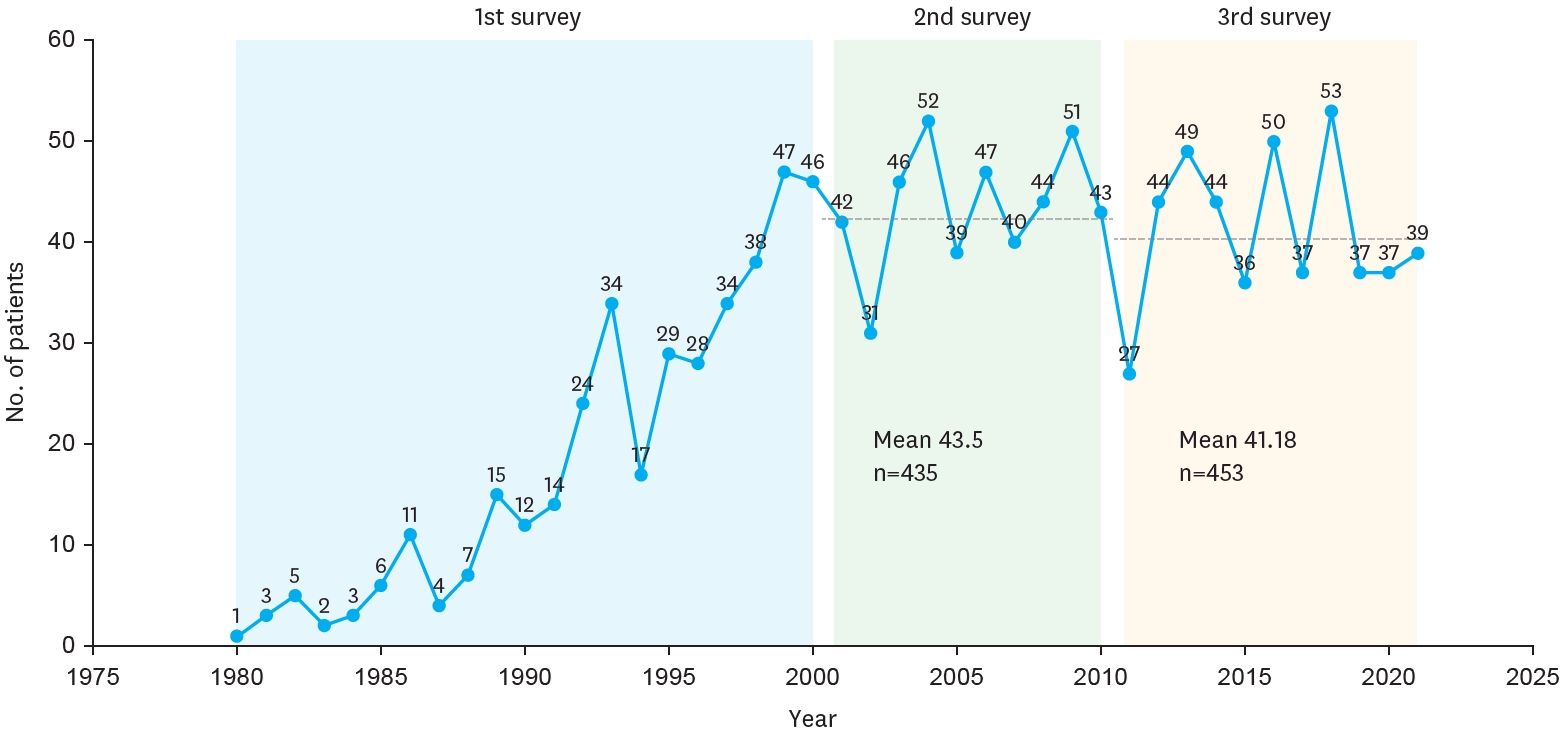
The mean number of BA patients per year remained stable between surveys (43.5 in the 2nd, 41.18 in the 3rd), though centralization of care increased, with 61.5% of cases managed by two major institutions in the 3rd survey. The median age at surgery decreased, and the use of preoperative imaging (especially magnetic resonance cholangiopancreatography) increased. The 10-year native liver survival rate declined from 59.8% to 53.7%, while overall 10-year survival improved slightly (92.9% to 93.2%). Postoperative complications, such as cholangitis and liver failure, persisted but were better categorized. The 3rd survey also reported improved mortality (4.9%) and reduced follow-up loss (11.5%) compared to the 2nd survey.
Conclusion
While overall survival after Kasai operation has remained high and even improved, native liver survival has slightly declined. The findings reflect earlier diagnosis, more consistent diagnostic imaging, and increasing centralization of care. These trends underscore the importance of long-term nationwide data collection in guiding future strategies for BA management in Korea.
  • 284 View
  • 8 Download
[English]
Comparative Analysis of National Surveys of Intestinal Atresia: A Retrospective Study by the Korean Association of Pediatric Surgeons
Jinyoung Park, Dayoung Ko, Eun-jung Koo, Hyunhee Kwon, Ki Hoon Kim, Dae Yeon Kim, Seong Chul Kim, Soo-Hong Kim, Wontae Kim, HaeYoung Kim, Hyun-Young Kim, So Hyun Nam, Jung-Man Namgoong, Junbeom Park, Taejin Park, Min-Jung Bang, Jeong-Meen Seo, Ji-Young Sul, Joonhyuk Son, Joohyun Sim, Soo Min Ahn, Hee-Beom Yang, Jung-Tak Oh, Chaeyoun Oh, Joong Kee Youn, Sanghoon Lee, Ju Yeon Lee, Kyong Ihn, Hye Kyung Chang, Yeon Jun Jeong, Eunyoung Jung, Jae Hee Chung, Min Jeong Cho, Yun-Mee Choe, Seok Joo Han, In Geol Ho, Jeong Hong
Adv Pediatr Surg 2025;31(1):8-15.   Published online May 28, 2025
DOI: https://doi.org/10.13029/aps.2025.31.1.8
Purpose
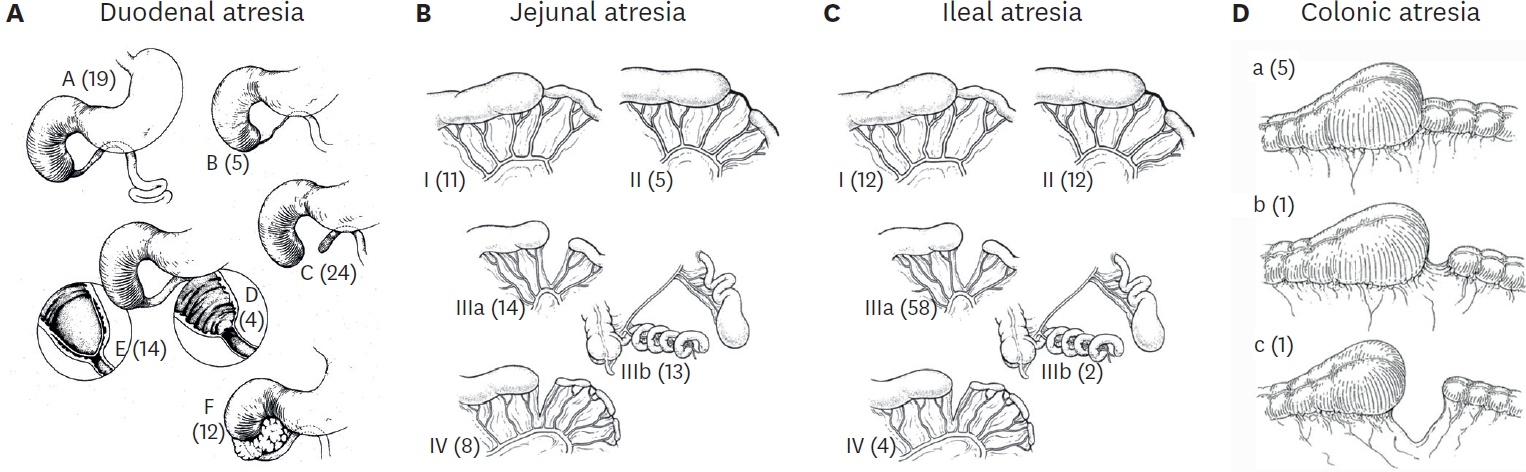
This study aims to investigate and compare the incidence, demographic characteristics, clinical manifestations, preoperative diagnostic methods, anatomical classifications, associated anomalies, operative treatments, and postoperative outcomes of patients with intestinal atresia treated by the members of the Korean Association of Pediatric Surgeons (KAPS) through three nationwide surveys.
Methods
KAPS conducted 3 national surveys in 1998, 2010, and 2024 to examine the patients diagnosed with intestinal atresia. In preparation for the survey, we developed a customized case registration form to obtain data on patient sex, birth weight, gestational age, clinical manifestations, preoperative diagnostic methods, anatomical types, associated anomalies, operative treatments, and postoperative outcomes. Authorized KAPS members completed the case registration form.
Results
The first, second, and third national surveys included 218, 222, and 236 individuals diagnosed with intestinal atresia, respectively. The male-to-female ratios were 1.5:1, 1.1:1, and 1.1:1, respectively. The first, second, and third national surveys revealed that 34.3%, 43.3%, and 53.4% of patients were born before 37 weeks of gestation, respectively. Additionally, 28.7%, 32.0%, and 40.7% of patients had a birth weight under 2,500 g. In the third national survey, duodenoduodenostomy was the most common procedure, performed in 70 out of 82 patients diagnosed with duodenal atresia. Resection and anastomosis were the main surgical procedures conducted in 47 out of 54 cases of jejunal atresia and 74 out of 92 cases of ileal atresia. The mortality rates in the first, second, and third national surveys were 13.8%, 3.6%, and 1.3% respectively, with the lowest rate observed in the third national survey.
Conclusion
These national surveys offer valuable insights into the current state of intestinal atresia, including specific surgical interventions and postoperative outcomes in South Korea. For pediatric surgeons aiming to enhance their understanding of intestinal atresia and its treatment options, these surveys could be an indispensable resource and guide.
  • 364 View
  • 3 Download
[English]
National Survey of Gastroschisis and Omphalocele by Korean Association of Pediatric Surgeons
Yeon Jun Jeong, Dayoung Ko, Eun-Jung Koo, Hyunhee Kwon, Dae Yeon Kim, Soo-Hong Kim, Wontae Kim, Hae-Young Kim, Hyun Young Kim, Seong Chul Kim, Younghyun Na, Jung-Man Namgoong, So Hyun Nam, Sungjoo Park, Junbeom Park, Jinyoung Park, Tae-Jun Park, Jeong-Meen Seo, Ji-Young Sul, Joonhyuk Son, Hyun Beak Shin, Joohyun Sim, Jung-Tak Oh, Chaeyoun Oh, Joong Kee Youn, Sanghoon Lee, Ju Yeon Lee, Cheolgu Lee, Kyong Ihn, Eunyoung Jung, Jae Hee Chung, Yong-Hoon Cho, Yun Mee Choe, Soo Jin Na Choi, Seok Joo Han, In Geol Ho
Adv Pediatr Surg 2024;30(2):39-51.   Published online December 13, 2024
DOI: https://doi.org/10.13029/aps.2024.30.2.39
Purpose
This study provides insights into the prevalence at birth, clinical characteristics, and outcomes of gastroschisis and omphalocele in Korea over the past decade, addressing the lack of localized data despite advanced healthcare capabilities.
Methods
The study retrospectively analyzed data from 20 pediatric surgical centers in Korea from January 2012 to December 2021, including 269 patients diagnosed with gastroschisis or omphalocele. Data variables included gender, gestational age, birth weight, associated anomalies, type of defect, surgical interventions, and outcomes.
Results
The study covered 269 patients, with 80 gastroschisis and 189 omphalocele cases. Gastroschisis prevalence at birth remained stable at 2.15 per 100,000 live births, while omphalocele increased to 5.08 per 100,000. Both conditions had similar gender ratios (0.95). Gastroschisis patients had lower birth weights (2,463.90±505.50 g) and smaller head circumferences (31.97±1.86 cm) compared to omphalocele patients (2,757.65±761.24 g, 32.78±2.64 cm). Omphalocele cases had more associated anomalies, especially cardiovascular issues. Prenatal diagnosis rates were high: 93.7% for gastroschisis and 86.4% for omphalocele. About 96.3% of gastroschisis and 84.1% of omphalocele patients were born in their treatment hospitals. Gastroschisis patients underwent surgery sooner (average 3.5 days) and started feeding later (16.5 days) than omphalocele patients (average 56.5 days to surgery, 6.6 days to start feeding). Hospital stays and follow-up durations were similar, averaging around 782.6 days for gastroschisis and 800.3 days for omphalocele patients. Survival rates were 89.7% for gastroschisis and 87.1% for omphalocele.
Conclusion
The study highlights the need for early diagnosis, centralized care, and specialized surgical approaches to optimize outcomes for gastroschisis and omphalocele patients in Korea. Enhanced prenatal screening and surgical protocols are recommended to improve these patients' prognosis.
  • 307 View
  • 6 Download
[English]
Comparative Analysis of Two National Surveys on Esophageal Atresia With or Without Tracheoesophageal Fistula: A Retrospective Study by the Korean Association of Pediatric Surgeons
Jinyoung Park, Dae Yeon Kim, Seong Chul Kim, Hyun-Young Kim, So Hyun Nam, Jeong-Meen Seo, Jung-Tak Oh, Myung-Duk Lee, Suk-Koo Lee, Soo Min Ahn, Hye Kyung Chang, Sung Eun Jung, Yeon Jun Jeong, Eunyoung Jung, Jae Hee Chung, Yong Hoon Cho, Soon Ok Choi, Seung Hoon Choi, Yun Mee Choe, Seok Joo Han, Jeong Hong, Nam-Hyuk Lee
Adv Pediatr Surg 2024;30(1):1-8.   Published online May 31, 2024
DOI: https://doi.org/10.13029/aps.2024.30.1.1
Purpose
The Korean Association of Pediatric Surgeons (KAPS) conducts annual nationwide surveys on various aspects of pediatric surgical diseases, with the results being discussed during KAPS’s annual spring meetings.
Methods
KAPS conducted two national surveys, in 1995 and 2016, to investigate esophageal atresia (EA) with or without tracheoesophageal fistula (TEF). The authors analyzed data from these surveys to identify differences or changes in the annual occurrence, demographic characteristics, clinical presentation, preoperative diagnostic methods, anatomical type, associated anomalies, surgical treatment, and postoperative outcomes among patients with EA/TEF treated by KAPS members.
Results
The first and second national surveys included 148 and 211 patients with EA/TEF, respectively. Excessive salivation was the most prevalent clinical symptom in both surveys. Type C was the most common form of EA/TEF in both surveys. The first survey included 126 patients, all of whom underwent open surgery. In the second survey, 152 (78.4%) of 194 patients underwent open surgery, while 34 (17.5%) underwent thoracoscopic surgery. Primary esophageal repair was performed on 96 (76.2%) of 126 patients in the first survey and on 160 (82.5%) of 194 patients in the second survey. Anastomotic strictures developed in 21.4% and 32.5% of patients, anastomotic leakage in 22.2% and 10.3%, recurrent fistula in 2.4% and 4.2% during the first and second surveys, respectively. The respective survival rates for group A were 90.2% and 98.3% in the first and second surveys. For group B, the rates were 73.9% and 98.1%, and for group C, they were 34.5% and 68.1%, respectively, according to the Waterston classifications.
Conclusion
These nationwide surveys provide comprehensive information on the status, detailed treatment, and outcomes for Korean pediatric patients with EA/TEF. They are anticipated to be an invaluable resource and guide for pediatric surgeons seeking to expand their knowledge on EA/TEF and its treatment options.
  • 255 View
  • 5 Download
[English]
Sacrococcygeal Teratoma: A Survey by the Korean Association of Pediatric Surgeons in 2018
Jung-Tak Oh, Hye Kyung Chang, Min Jeong Cho, Yong Hoon Cho, Soo Jin Na Choi, Yoon Mi Choi, Jae Hee Chung, Sang Young Chung, Jeong Hong, Seok Joo Han, Yeon Jun Jeong, Eunyoung Jung, Kyuhwan Jung, Dae Youn Kim, Hae-Young Kim, Hyun-Young Kim, Ki Hoon Kim, Sang Youn Kim, Seong Chul Kim, Seong Min Kim, Soo-Hong Kim, Jong-In Lee, Myung-Duk Lee, Nam-Hyuk Lee, Suk-Koo Lee, So Hyun Nam, Jin Young Park, Kwi-Won Park, Tae-Jin Park, Jeong-Meen Seo, Jae Ho Shin, Jiyoung Sul
Adv Pediatr Surg 2019;25(2):35-43.   Published online December 18, 2019
DOI: https://doi.org/10.13029/aps.2019.25.2.35
Purpose

The Korean Association of Pediatric Surgeons (KAPS) performed a nationwide survey on sacrococcygeal teratoma in 2018.

Methods

The authors reviewed and analyzed the clinical data of patients who had been treated for sacrococcygeal teratoma by KAPS members from 2008 to 2017.

Results

A total of 189 patients from 18 institutes were registered for the study, which was the first national survey of this disease dealing with a large number of patients in Korea. The results were discussed at the 34th annual meeting of KAPS, which was held in Jeonju on June 21–22, 2018.

Conclusions

We believe that this study could be utilized as a guideline for the treatment of sacrococcygeal teratoma to diminish pediatric surgeons' difficulties in treating this disease and thus lead to better outcomes.

Citations

Citations to this article as recorded by  
  • Analysis of Pediatric Surgery Using the National Healthcare Insurance Service Database in Korea: How Many Pediatric Surgeons Do We Need in Korea?
    Chaeyoun Oh, Sanghoon Lee, Hye Kyung Chang, Soo Min Ahn, Kyunghee Chae, Sujeong Kim, Sukil Kim, Jeong-Meen Seo
    Journal of Korean Medical Science.2021;[Epub]     CrossRef
  • 168 View
  • 1 Download
  • 1 Crossref
[English]
The Usefulness of Calretinin Immunohistochemistry for Rectal Suction Biopsy to Diagnose Hirschsprung’s Disease
Jaeyeop Jeong, Sang Pyo Kim, Eunyoung Jung, Soon-Ok Choi
J Korean Assoc Pediatr Surg 2016;22(2):23-28.   Published online December 22, 2016
DOI: https://doi.org/10.13029/jkaps.2016.22.2.23
Purpose

Hirschsprung’s disease (HD) is a congenital intestinal disorder with absence of ganglion cells in the intestinal muscle and submucosa. Diagnosis is based on histopathological study such as H&E, and acetylcholinesterase (AchE) immunohistochemistry. Calretinin immunohistochemistry was introduced as a new diagnostic method against limitations of other staining. The aim of this study is to investigate the usefulness of calretinin immunohistochemistry for the diagnosis of HD compared to H&E and AchE.

Methods

Ten patients with HD and 22 non-HD patients were included in the study. H&E staining, AchE and calretinin immunohistochemistry were performed in all 32 patients. All slides were evaluated by same single pathologist and the diagnostic value was calculated for each H&E stain, AchE immunohistochemical staining, and calretinin immunohistochemical staining.

Results

Calretinin method had sensitivity of 100% and specificity of 100% for diagnosis of HD. Its diagnostic accuracy was 100%. AchE staining showed 100% of specificity and 80% of sensitivity. Diagnostic accuracy of H&E staining was 56.3%.

Conclusion

We concluded that calretinin immunohistochemistry is a very useful and valuable method to diagnosis HD patient.

  • 141 View
  • 0 Download

Case Reports

[English]
Tuberculous Iliopsoas Muscle Abscess Associated with Multiple Intraabdominal and Thoracic Abscesses in 9-year-old Boy
Eunyoung Jung, Woo-Hyun Park, Soon-Ok Choi
J Korean Assoc Pediatr Surg 2013;19(2):150-155.   Published online December 24, 2013
DOI: https://doi.org/10.13029/jkaps.2013.19.2.150

Tuberculous Iliopsoas muscle abscess is a rare manifestation in patient with extrapulmonary tuberculosis and hardly observed in developed country. Paradoxical response to anti-tuberculous medication could make difficult therapeutic decision to clinicians. The authors report a case of tuberculous iliopsoas muscle abscess with multiple intraabdominal and thoracic abscesses in 9 year-old-boy who presented paradoxical response to anti-tuberculous treatment.

  • 112 View
  • 0 Download
[English]
Hemorrhagic Complication of Protruding Preperitoneal Fat Presenting as an Incarcerated Inguinal Hernia in a Patient with Clinically Occult Inguinal Hernia
Eunyoung Jung, Woo-Hyun Park, Soon-Ok Choi
J Korean Assoc Pediatr Surg 2013;19(2):145-149.   Published online December 24, 2013
DOI: https://doi.org/10.13029/jkaps.2013.19.2.145
  • 237 View
  • 0 Download

Original Article

[English]
Early Experience of Laparoscopic Adhesiolysis in Children with Postoperative Intestinal Obstruction
Jeongwoo Lee, Eunyoung Jung, Woo-Hyun Park, Soon-Ok Choi
J Korean Assoc Pediatr Surg 2013;19(1):32-38.   Published online June 28, 2013
DOI: https://doi.org/10.13029/jkaps.2013.19.1.32

The purpose of this study is to analyze the early experience of the laparoscopic adhesiolysis for the intestinal obstruction due to postoperative adhesion. Seven patients were included in this study. The median age of those patients was 13, and there were 3 males and 4 females. Previous diagnosis and surgical procedure were various in seven cases, including small bowel resection with tapering enteroplasty, Boix-Ochoa fundopl ication, Ladd's procedure with appendectomy, mesenteric tumor resection with small bowel anastomosis, ileocecal resection and anastomosis, primary gastric repair, and both high ligation. A successful laparoscopic adhesiolysis was performed in one who had high ligation for inguinal hernia and had a single band adhesion. Six out of 7 (86%) cases needed to convert open surgery due to multiple and dense type of adhesion. In conclusion, laparoscopic approach with postoperative small bowel adhesion seems safe. However, it might be prudently considered because of high rates of conversion in children.

  • 131 View
  • 0 Download

Case Report

[English]
Effective Management of Gastropares is with Erythromyc in after Laparoscopic Nissen Fundoplication -A case report-
Eunyoung Jung, Jin-Bok Hwang, Soon-Ok Choi, Woo-Hyun Park
J Korean Assoc Pediatr Surg 2012;18(1):30-34.   Published online June 30, 2012
DOI: https://doi.org/10.0000/jkaps.2012.18.1.30

Delayed gastric emptying (DGE)commonly occurs after Nissen fundoplication in patients with gastroesophageal reflux disease. Since the understanding of its pathogenesis is insufficient, an effective method of management has not yet been suggested. The authors report a case of a 16-year-old girl with DGE after laparoscopic Nissen fundoplication and treated with intravenous injection of low dose erythromycin.

  • 54 View
  • 0 Download

Original Article

[English]
MRI Findings of Long-term Survivals after Kasai Portoenterostomy
JiKwang Jung, Eunyoung Jung, Woo-Hyun Park, Soon-Ok Choi
J Korean Assoc Pediatr Surg 2012;18(1):12-17.   Published online June 30, 2012
DOI: https://doi.org/10.0000/jkaps.2012.18.1.12

The purpose of this study is to analyse clinical impact of specific MRI findings in liver in patients of long-term survivors after Kasai portoenterostomy (KPE). Twenty-eight patients who were underwent KPE were followed up more than 5 years. Macro-regenerative nodule (MRN) and beaded-duct dilatation (BDD) were considered as important findings in liver MRI. The association between these findings in MRI and clinical indicator, serum bilirubin level and history of cholangitis were evaluated. Sixteen patients (57.1%) were shown MRN in liver MRI. There were 14 patients(50%) whose MRI showed BDD. Serum total and direct bilirubin were 3.6mg/dL and 1.8mg/dL respectively in positive MRN group whereas 1.4mg/dL and 0.7mg/dL in negative MRN group (p 0.427). Serum total and direct bilirubin level were 4.2mg/dL and 2.1mg/dL in patients with BDD negative group compare to 1.1mg/dL and 0.5mg/dL in BDD positive group (p 0.281). The odds ratio to have cholangitis in the patient with MRN was 2.3 and 0.53 in patient with BDD in their MRI findings. MRN in liver MRI may suggest high bilirubin level and more chance to have cholangitis, but the findings of BDD may related to low bilirubin level and less change to have cholangitis.

  • 56 View
  • 0 Download

Case Report

[English]
Hypertrophic Pyloric Stenosis Occurring in Fasting State with Gastrostomy After Surgery for Esophageal Atresia with Tracheoesophageal Fistula
Eunyoung Jung, Soon Ok Choi, Woo Hyun Park
J Korean Assoc Pediatr Surg 2011;17(1):88-92.   Published online June 30, 2011
DOI: https://doi.org/10.13029/jkaps.2011.17.1.88

The onset of hypertrophic pyloric stenosis in the postoperative course of esophageal atresia with tracheoesophageal fistula is rarely reported. The diagnosis could be delayed due to its mimicking symptoms of other postoperative complications including gastroesophageal reflux or anastomotic stricture. We present an infant who had surgery for esophageal atresia with tracheoesophageal fistula. He had never fed since birth. The infant presented with an increased amount of orogastric tube drainage and consistently distended gastric air on simple abdominal X-ray. Abdominal ultrasonography showed hypertrophic thick pyloric muscle. The diagnosis of pyloric stenosis was confirmed d is rarely reported. The diagnosis could be delayed due to its mimicking symptoms of other postoperative complications including gastroesophageal reflux or anastomotic stricture. We present an infant who had surgery for esophageal atresia with tracheoesophageal fistula. He had never fed. The infant presented with uring surgery. After pyloromyotomy, the patient's condition improved.

Citations

Citations to this article as recorded by  
  • Prenatally Diagnosed Gastric Duplication - Case report -
    Ki-Kwan Kang, Jeong Hong
    Journal of the Korean Association of Pediatric Surgeons.2012; 18(1): 35.     CrossRef
  • 106 View
  • 0 Download
  • 1 Crossref

Original Article

[English]
Associated Anomaly of Esophageal Atresia
Jino Baek, Eunyoung Jung, Woo Hyun Park, Soon Ok Choi
J Korean Assoc Pediatr Surg 2011;17(1):81-87.   Published online June 30, 2011
DOI: https://doi.org/10.13029/jkaps.2011.17.1.81

This study was aimed to evaluate associated congenital anomalies in the patients with esophageal atresia with tracheoesophageal fistula (EA/TEF). Forty-two neonates with the diagnosis of EA/TEF treated over a 10 year period in a single institution were included in this study. The demography of EA/TEF was analyzed. Major associated anomalies including vertebral, anal, cardiac, renal, limb, neurologic and chromosome were reviewed and categorized. Males were slightly more dominant than females (1.47:1) and all patients had Gross type C EA/TEF. Only 19% of the patients had solitary EA/TEF without associated anomalies. Cardiac anomalies were the most common associated congenital anomaly in patients with EA/TEF (73.8%). But 47.6% were cured spontaneously or did not affect patients' life. Atrial septal defect (ASD) was the most common cardiac anomaly followed by patent ductus arteriosus (PDA) and ventricular septal defect (VSD). Among gastrointestinal anomalies (23.8%), anorectal malformations were the most frequent, 70% Vertebral and limb abnormalities accounted for 11.9% and urogenital malformations 9.5% of the anomalies in patients with EA/TEF. VACTERL associated anomalies were 23.8% and 4.8% had full VACTERL. Almost 12% of EA/TEF had neurologic anomalies. Patients with EA/TEF require preoperative evaluation including neurologic evaluation to detect anomalies not related to VACTERL. Though associated cardiac anomaly occurred in 73.8% of patients in our study, only 21.42% needed surgical correction. The authors suggesrs further studies with large numbers of patients with EA/TEF.

Citations

Citations to this article as recorded by  
  • DENTAL CARIES TREATMENT IN FEEDING PROBLEM PATIENT WITH CONGENITAL ESOPHAGEAL ATRESIA : A CASE REPORT
    Seon-Jae Heo, Mi-Yeon Lee, Teo Jeon Shin, Hong-Keun Hyun, Jung-Wook Kim, Ki-Taeg Jang, Sang-Hoon Lee, Chong-Chul Kim, Young-Jae Kim
    The Journal of Korea Assosiation for Disability and Oral Health.2016; 12(1): 6.     CrossRef
  • 93 View
  • 0 Download
  • 1 Crossref

Case Reports

[English]

Tracheal injury is a rare complication of endo-tracheal intubation. However in neonates, the rates of morbidity and mortality are high. Recommendations for treatment are based on the several reports of this injury and are individualized. Conservative management can be effective in some cases. We describe the case of a neonate who presented with subcutaneous emphysema after intubation in a neonatal intensive care unit. This patient suffered full VACTERL syndrome and had 1.7mm diameter subglottic stenosis. Conservative management resulted in no further increase in subcutaneous emphysema and after 10 days the patient was stable.

  • 86 View
  • 0 Download
[English]
Infantile Extraosseous Ewing's Sarcoma in the Left Arm: A Case Report
Eunyoung Jung, Soon Ok Choi, Woo Hyun Park
J Korean Assoc Pediatr Surg 2009;15(1):80-85.   Published online June 30, 2009
DOI: https://doi.org/10.13029/jkaps.2009.15.1.80

Extraosseous Ewing's sarcoma is a rare primary malignant soft tissue tumor which is histologically identical to Ewing's sarcoma. This tumor tends to involve the soft tissue of the lower extremity and paravertebral region of adolescents and young adults but particularly rare in infants. We recently experienced a case of extraosseous Ewing's sarcoma which presented in the left arm of 4 months infant.

  • 81 View
  • 0 Download