

Skip to main navigation Skip to main content
  • KAPS
  • E-Submission

APS : Advances in Pediatric Surgery

OPEN ACCESS
ABOUT
BROWSE ARTICLES
EDITORIAL POLICY
FOR CONTRIBUTORS

Page Path

24
results for

"Jinyoung Park"

Article category

Keywords

Publication year

Authors

Funded articles

"Jinyoung Park"

Original Articles

[English]
A Comparative Study of Three National Surveys on Biliary Atresia by the Korean Association of Pediatric Surgeons
Yeon Jun Jeong, Dayoung Ko, Hyunhee Kwon, Ki Hoon Kim, Dae Yeon Kim, Soo-Hong Kim, Wontae Kim, Hae-Young Kim, Hyun Young Kim, Seong Chul Kim, Younghyun Na, Jung-Man Namgoong, So Hyun Nam, Junbeom Park, Jinyoung Park, Tae-Jun Park, Jeong-Meen Seo, Ji-Young Sul, Joonhyuk Son, Hyun Beak Shin, Joohyun Sim, Soo Min Ahn, Hee Beom Yang, Jung-Tak Oh, Chaeyoun Oh, Joong Kee Youn, Sanghoon Lee, Ju Yeon Lee, Kyong Ihn, Hye Kyung Chang, Eunyoung Jung, Jae Hee Chung, Yu Jeong Cho, Yun Mee Choe, Soo Jin Na Choi, Seok Joo Han, In Geol Ho, Ji-Won Han
Adv Pediatr Surg 2025;31(2):47-58.   Published online July 16, 2025
DOI: https://doi.org/10.13029/aps.2025.31.2.47
Purpose
Biliary atresia (BA) is a rare but progressive cholangiopathy and the leading cause of pediatric liver transplantation worldwide. The Korean Association of Pediatric Surgeons (KAPS) has conducted three national surveys (2001, 2011, and 2023) to assess long-term trends in the diagnosis, treatment, and outcomes of BA. This study provides a comparative analysis of the 2nd and 3rd national surveys, with reference to selected findings from the 1st survey.
Methods
This study included 453 patients from the 3rd national survey (2011–2021) and 435 patients from the 2nd survey (2001–2010), all of whom underwent Kasai portoenterostomy. Data were collected via electronic case report forms from pediatric surgical centers nationwide. Comparisons were made regarding demographics, clinical features, diagnostic patterns, operative details, follow-up outcomes, and survival. Kaplan–Meier analysis was used to evaluate long-term survival.
Results
The mean number of BA patients per year remained stable between surveys (43.5 in the 2nd, 41.18 in the 3rd), though centralization of care increased, with 61.5% of cases managed by two major institutions in the 3rd survey. The median age at surgery decreased, and the use of preoperative imaging (especially magnetic resonance cholangiopancreatography) increased. The 10-year native liver survival rate declined from 59.8% to 53.7%, while overall 10-year survival improved slightly (92.9% to 93.2%). Postoperative complications, such as cholangitis and liver failure, persisted but were better categorized. The 3rd survey also reported improved mortality (4.9%) and reduced follow-up loss (11.5%) compared to the 2nd survey.
Conclusion
While overall survival after Kasai operation has remained high and even improved, native liver survival has slightly declined. The findings reflect earlier diagnosis, more consistent diagnostic imaging, and increasing centralization of care. These trends underscore the importance of long-term nationwide data collection in guiding future strategies for BA management in Korea.
  • 284 View
  • 8 Download
[English]
Comparative Analysis of National Surveys of Intestinal Atresia: A Retrospective Study by the Korean Association of Pediatric Surgeons
Jinyoung Park, Dayoung Ko, Eun-jung Koo, Hyunhee Kwon, Ki Hoon Kim, Dae Yeon Kim, Seong Chul Kim, Soo-Hong Kim, Wontae Kim, HaeYoung Kim, Hyun-Young Kim, So Hyun Nam, Jung-Man Namgoong, Junbeom Park, Taejin Park, Min-Jung Bang, Jeong-Meen Seo, Ji-Young Sul, Joonhyuk Son, Joohyun Sim, Soo Min Ahn, Hee-Beom Yang, Jung-Tak Oh, Chaeyoun Oh, Joong Kee Youn, Sanghoon Lee, Ju Yeon Lee, Kyong Ihn, Hye Kyung Chang, Yeon Jun Jeong, Eunyoung Jung, Jae Hee Chung, Min Jeong Cho, Yun-Mee Choe, Seok Joo Han, In Geol Ho, Jeong Hong
Adv Pediatr Surg 2025;31(1):8-15.   Published online May 28, 2025
DOI: https://doi.org/10.13029/aps.2025.31.1.8
Purpose
This study aims to investigate and compare the incidence, demographic characteristics, clinical manifestations, preoperative diagnostic methods, anatomical classifications, associated anomalies, operative treatments, and postoperative outcomes of patients with intestinal atresia treated by the members of the Korean Association of Pediatric Surgeons (KAPS) through three nationwide surveys.
Methods
KAPS conducted 3 national surveys in 1998, 2010, and 2024 to examine the patients diagnosed with intestinal atresia. In preparation for the survey, we developed a customized case registration form to obtain data on patient sex, birth weight, gestational age, clinical manifestations, preoperative diagnostic methods, anatomical types, associated anomalies, operative treatments, and postoperative outcomes. Authorized KAPS members completed the case registration form.
Results
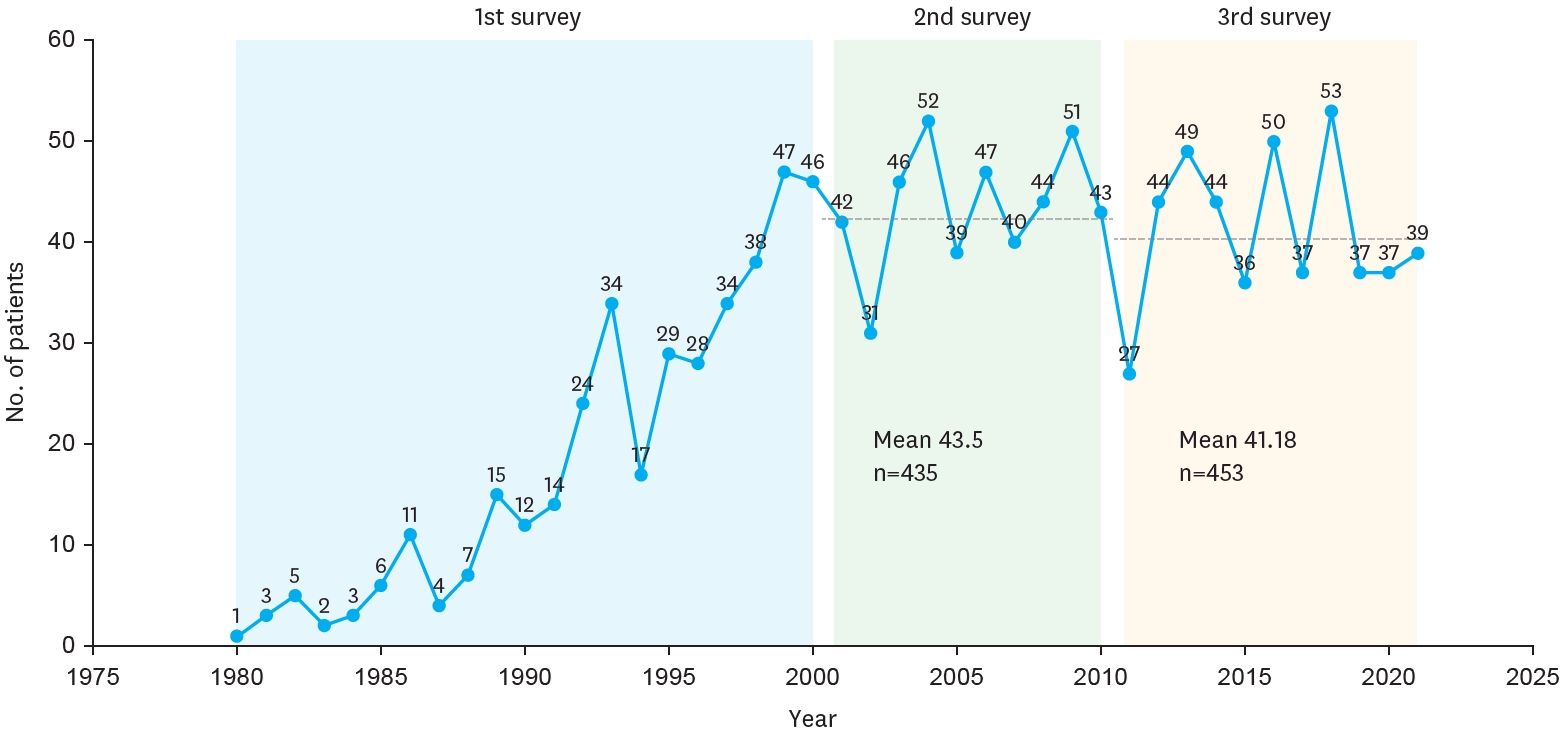
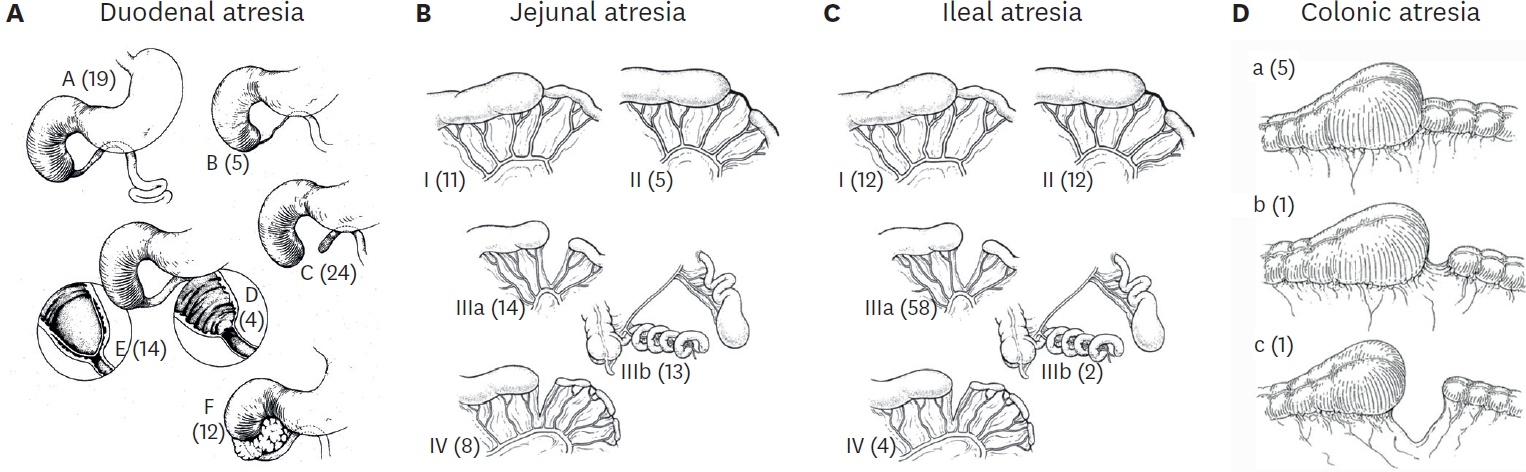
The first, second, and third national surveys included 218, 222, and 236 individuals diagnosed with intestinal atresia, respectively. The male-to-female ratios were 1.5:1, 1.1:1, and 1.1:1, respectively. The first, second, and third national surveys revealed that 34.3%, 43.3%, and 53.4% of patients were born before 37 weeks of gestation, respectively. Additionally, 28.7%, 32.0%, and 40.7% of patients had a birth weight under 2,500 g. In the third national survey, duodenoduodenostomy was the most common procedure, performed in 70 out of 82 patients diagnosed with duodenal atresia. Resection and anastomosis were the main surgical procedures conducted in 47 out of 54 cases of jejunal atresia and 74 out of 92 cases of ileal atresia. The mortality rates in the first, second, and third national surveys were 13.8%, 3.6%, and 1.3% respectively, with the lowest rate observed in the third national survey.
Conclusion
These national surveys offer valuable insights into the current state of intestinal atresia, including specific surgical interventions and postoperative outcomes in South Korea. For pediatric surgeons aiming to enhance their understanding of intestinal atresia and its treatment options, these surveys could be an indispensable resource and guide.
  • 364 View
  • 3 Download
[English]
National Survey of Gastroschisis and Omphalocele by Korean Association of Pediatric Surgeons
Yeon Jun Jeong, Dayoung Ko, Eun-Jung Koo, Hyunhee Kwon, Dae Yeon Kim, Soo-Hong Kim, Wontae Kim, Hae-Young Kim, Hyun Young Kim, Seong Chul Kim, Younghyun Na, Jung-Man Namgoong, So Hyun Nam, Sungjoo Park, Junbeom Park, Jinyoung Park, Tae-Jun Park, Jeong-Meen Seo, Ji-Young Sul, Joonhyuk Son, Hyun Beak Shin, Joohyun Sim, Jung-Tak Oh, Chaeyoun Oh, Joong Kee Youn, Sanghoon Lee, Ju Yeon Lee, Cheolgu Lee, Kyong Ihn, Eunyoung Jung, Jae Hee Chung, Yong-Hoon Cho, Yun Mee Choe, Soo Jin Na Choi, Seok Joo Han, In Geol Ho
Adv Pediatr Surg 2024;30(2):39-51.   Published online December 13, 2024
DOI: https://doi.org/10.13029/aps.2024.30.2.39
Purpose
This study provides insights into the prevalence at birth, clinical characteristics, and outcomes of gastroschisis and omphalocele in Korea over the past decade, addressing the lack of localized data despite advanced healthcare capabilities.
Methods
The study retrospectively analyzed data from 20 pediatric surgical centers in Korea from January 2012 to December 2021, including 269 patients diagnosed with gastroschisis or omphalocele. Data variables included gender, gestational age, birth weight, associated anomalies, type of defect, surgical interventions, and outcomes.
Results
The study covered 269 patients, with 80 gastroschisis and 189 omphalocele cases. Gastroschisis prevalence at birth remained stable at 2.15 per 100,000 live births, while omphalocele increased to 5.08 per 100,000. Both conditions had similar gender ratios (0.95). Gastroschisis patients had lower birth weights (2,463.90±505.50 g) and smaller head circumferences (31.97±1.86 cm) compared to omphalocele patients (2,757.65±761.24 g, 32.78±2.64 cm). Omphalocele cases had more associated anomalies, especially cardiovascular issues. Prenatal diagnosis rates were high: 93.7% for gastroschisis and 86.4% for omphalocele. About 96.3% of gastroschisis and 84.1% of omphalocele patients were born in their treatment hospitals. Gastroschisis patients underwent surgery sooner (average 3.5 days) and started feeding later (16.5 days) than omphalocele patients (average 56.5 days to surgery, 6.6 days to start feeding). Hospital stays and follow-up durations were similar, averaging around 782.6 days for gastroschisis and 800.3 days for omphalocele patients. Survival rates were 89.7% for gastroschisis and 87.1% for omphalocele.
Conclusion
The study highlights the need for early diagnosis, centralized care, and specialized surgical approaches to optimize outcomes for gastroschisis and omphalocele patients in Korea. Enhanced prenatal screening and surgical protocols are recommended to improve these patients' prognosis.
  • 307 View
  • 6 Download
[English]
Comparative Analysis of Two National Surveys on Esophageal Atresia With or Without Tracheoesophageal Fistula: A Retrospective Study by the Korean Association of Pediatric Surgeons
Jinyoung Park, Dae Yeon Kim, Seong Chul Kim, Hyun-Young Kim, So Hyun Nam, Jeong-Meen Seo, Jung-Tak Oh, Myung-Duk Lee, Suk-Koo Lee, Soo Min Ahn, Hye Kyung Chang, Sung Eun Jung, Yeon Jun Jeong, Eunyoung Jung, Jae Hee Chung, Yong Hoon Cho, Soon Ok Choi, Seung Hoon Choi, Yun Mee Choe, Seok Joo Han, Jeong Hong, Nam-Hyuk Lee
Adv Pediatr Surg 2024;30(1):1-8.   Published online May 31, 2024
DOI: https://doi.org/10.13029/aps.2024.30.1.1
Purpose
The Korean Association of Pediatric Surgeons (KAPS) conducts annual nationwide surveys on various aspects of pediatric surgical diseases, with the results being discussed during KAPS’s annual spring meetings.
Methods
KAPS conducted two national surveys, in 1995 and 2016, to investigate esophageal atresia (EA) with or without tracheoesophageal fistula (TEF). The authors analyzed data from these surveys to identify differences or changes in the annual occurrence, demographic characteristics, clinical presentation, preoperative diagnostic methods, anatomical type, associated anomalies, surgical treatment, and postoperative outcomes among patients with EA/TEF treated by KAPS members.
Results
The first and second national surveys included 148 and 211 patients with EA/TEF, respectively. Excessive salivation was the most prevalent clinical symptom in both surveys. Type C was the most common form of EA/TEF in both surveys. The first survey included 126 patients, all of whom underwent open surgery. In the second survey, 152 (78.4%) of 194 patients underwent open surgery, while 34 (17.5%) underwent thoracoscopic surgery. Primary esophageal repair was performed on 96 (76.2%) of 126 patients in the first survey and on 160 (82.5%) of 194 patients in the second survey. Anastomotic strictures developed in 21.4% and 32.5% of patients, anastomotic leakage in 22.2% and 10.3%, recurrent fistula in 2.4% and 4.2% during the first and second surveys, respectively. The respective survival rates for group A were 90.2% and 98.3% in the first and second surveys. For group B, the rates were 73.9% and 98.1%, and for group C, they were 34.5% and 68.1%, respectively, according to the Waterston classifications.
Conclusion
These nationwide surveys provide comprehensive information on the status, detailed treatment, and outcomes for Korean pediatric patients with EA/TEF. They are anticipated to be an invaluable resource and guide for pediatric surgeons seeking to expand their knowledge on EA/TEF and its treatment options.
  • 255 View
  • 5 Download
[English]
Abdominal Lymphatic Malformation in Children
Sangho Lee, Jinyoung Park
Adv Pediatr Surg 2018;24(2):60-67.   Published online December 21, 2018
DOI: https://doi.org/10.13029/aps.2018.24.2.60
Purpose

Lymphatic malformations are benign congenital malformations of the lymphatic system that occur predominantly in children. Most lymphatic malformations occur in the head and neck region, with those in abdominal locations, such as the mesentery, omentum and retroperitoneum, being less common, accounting for fewer than 5% of lymphatic malformations in children. This study analyzed the clinicopathologic characteristics and treatment outcomes of abdominal lymphatic malformations in children.

Methods

The medical records of 12 pediatric patients treated for abdominal lymphatic malformations at our institution between April 1999 and September 2017 were retrospectively reviewed. Demographic and clinical characteristics, including gender, age, symptoms and signs, diagnostic modalities, and treatment results, were analyzed.

Results

The 12 patients included 11 boys and 1 girl, ranging in age from 3 months to 17 years (median 36.5 months) at presentation. The primary signs and symptoms included abdominal pain, abdominal mass and abdominal distention. Other symptoms and signs included fever, vomiting, scrotal pain and mass, and right inguinal mass. All patients were diagnosed by abdominal ultrasonography and computed tomography, and all underwent surgical excision with or without bowel resection. The lymphatic malformations occurred in the retroperitoneum (n=4), omentum (n=4), jejunal mesentery (n=2), and retroperitoneum and mesentery (n=2). Seven patients underwent complete mass excision, including 3 who underwent laparoscopic excisions, and 3 who underwent mass excision with segmental resection of the adjoining bowel. Two patients underwent incomplete excision because the lesion was extensive and invaded the superior mesenteric vessels. There was no major perioperative morbidity in any patient. At a median follow-up of 50 months (range, 8–183 months), only 1 patient experienced recurrence.

Conclusion

Although abdominal lymphatic malformations are benign, most children present with acute abdominal symptoms, necessitating early surgical treatment.

Citations

Citations to this article as recorded by  
  • Comparisons of clinical features between pediatric and adult patients with surgically resected abdominal lymphatic malformations: An observational study of a large cohort
    Min Yang, Cong-xia Yang, Yu-jia Zhang, Jiang-yuan Zhou, Tong Qiu, Zi-xin Zhang, Yi Ji
    Asian Journal of Surgery.2025; 48(10): 6047.     CrossRef
  • Abdominal lymphatic malformations in children: case series
    Carmine Noviello, Alfonso Papparella, Mirko Bertozzi, Giovanna Riccipetitoni, Ilaria Cascone, Carmine Botta, Giulia Fusi, Veronica Vitali, Mercedes Romano
    La Pediatria Medica e Chirurgica.2025;[Epub]     CrossRef
  • Mesenteric polycystic lymphangiomatosis in a pediatric patient. Case report
    Giovanni Callizaya Macedo, Jhossmar Cristians Auza-Santivañez, Evely Rocio Cussi Quitihuari, Daniel Ramiro Elías Vallejos Rejas, Jose Bernardo Antezana-Muñoz, Magaly Zurita Villazón
    SCT Proceedings in Interdisciplinary Insights and Innovations.2024; 2: 343.     CrossRef
  • Operative Management of Intra-abdominal Lymphatic Malformations in Children: A Single Tertiary Center Experience
    Hanna Hyvönen, Johanna Aronniemi, Päivi Salminen, Kristiina Kyrklund
    Journal of Pediatric Surgery.2024; 59(9): 1875.     CrossRef
  • Malformaciones linfáticas abdominales en una población pediátrica: experiencia en un centro de referencia de Medellín, Colombia
    Nicolas Dayam Rosales-Parra, Cristhian Fabián Acero-Murillo, María Paula García-Aristizabal, Walter David Romero-Espitia
    Revista Colombiana de Cirugía.2022;[Epub]     CrossRef
  • Long-term outcomes of lymphatic malformations in children: An 11-year experience from a tertiary referral center
    Hanna Hyvönen, Päivi Salminen, Kristiina Kyrklund
    Journal of Pediatric Surgery.2022; 57(12): 1005.     CrossRef
  • Bowel perforation following percutaneous sclerotherapy of an intra-abdominal lymphatic malformation
    Rachelle E. Durand, Pascal Heye, Anne Marie Cahill, Pablo Laje, Abhay S. Srinivasan
    Pediatric Radiology.2022; 52(8): 1592.     CrossRef
  • Intra-abdominal lymphatic malformation management in light of the updated International Society for the Study of Vascular Anomalies classification
    Heba Elbaaly, Nelson Piché, Françoise Rypens, Niina Kleiber, Chantale Lapierre, Josée Dubois
    Pediatric Radiology.2021; 51(5): 760.     CrossRef
  • 302 View
  • 2 Download
  • 8 Crossref

Case Reports

[English]
Familial Isolated Anorectal Malformation: A Case Report
Jinyoung Park
J Korean Assoc Pediatr Surg 2017;23(1):12-14.   Published online June 26, 2017
DOI: https://doi.org/10.13029/jkaps.2017.23.1.12

There have been a few reports of familial anorectal malformations extending over more than one generation. We experienced a case of a family with 3 members spanning 2 generations affected with isolated low type anorectal malformations. They had same low type of anorectal malformations. In all 3 patients, a perianal anoplasty was performed.

  • 110 View
  • 3 Download
[English]
Median Raphe Cyst in a 2-Year-Old Boy
Jihoon Jang, Jinyoung Park
J Korean Assoc Pediatr Surg 2015;21(2):35-37.   Published online December 22, 2015
DOI: https://doi.org/10.13029/jkaps.2015.21.2.35

Median raphe cyst (MRC) of the perineum is rare congenital midline cyst of the male genitalia. MRC is thought to be caused by congenital alterations in the embryologic development of the male genitalia during fetal life. MRC can be found on the midline position between the urethral meatus and the anus. The lesion can be cystic, but sometimes it looks like an elongated configuration called a raphe canal. Diagnosis in childhood is particularly rare because they are usually asymptomatic, but some cases have reportedly been identified after infection. Although conservative treatment can be possible in small asymptomatic lesions, the treatment of choice is simple excision followed by primary closure in symptomatic cases. We describe here the case of 2-year-old boy presented at our institution with a 10-month history of anomaly of the perineal median raphe, which was treated by surgical excision.

  • 393 View
  • 0 Download

Original Article

[English]
Risk Factors Associated with the Need for Operative Treatment of Intussusception in Children
Heontak Ha, Jayun Cho, Jinyoung Park
J Korean Assoc Pediatr Surg 2014;20(1):17-22.   Published online June 30, 2014
DOI: https://doi.org/10.13029/jkaps.2014.20.1.17

The aim of this study was to identify the risk factor related to the need for operative treatment and avoid unnecessary non-operative management for intussusception in children. We retrospectively reviewed medical records of patient treated for intussusception at our institution between January 2006 and January 2013. Clinical features such as gender, age, seasonal variation, symptoms and signs, treatment results were analyzed. Univariate and multivariate analyses including a chi-square test for categorical variables and logistic regression analysis were performed. During the study period, 356 patients were treated for intussusception. 328 (92.1%) was treated successfully by the non-operative pneumoreduction, and 28 (7.9%) required operative management. On univariate analysis, risk factors which were related to the need for operative treatment were age, vomiting, bloody stool, lethargy, and symptoms duration. A logistic regression analysis in order to assess for independent predictors of operative treatment was performed. Age (<6 vs ≥12 months) (OR 4.713, 95% CI 1.198~18.539, p=0.027) and symptoms duration longer than 48 hours (OR 4.534, 95% CI 1.846~11.137, p=0.001) were significantly associated with a requirement for operative treatment. We conclude that younger age and a longer duration of symptoms (≥ 48 hours) are the independent risk factor related to the need for operative treatment for intussusception. Early surgical intervention or transfer to a hospital with pediatric surgical capabilities should be considered for patients with these findings.

Citations

Citations to this article as recorded by  
  • Feasibility of Laparoscopic Surgery for Intussusception in Pediatric Patients and Risk of Bowel Resection
    Eun Ju Song, So Hyun Nam
    The Journal of Minimally Invasive Surgery.2018; 21(4): 154.     CrossRef
  • Risk Factors for Surgical Procedure on Ileo-Colic Intussusception in Children
    Sin-Hwe Kim, Soo-Min Jung, Jong-In Lee
    Journal of the Korean Association of Pediatric Surgeons.2016; 22(1): 10.     CrossRef
  • 108 View
  • 0 Download
  • 2 Crossref

Case Reports

[English]
Laparoscopic-Assisted Transanal Endorectal Pull-Through for Segmental Dilatation of Rectosigmoid Colon in a Child
Ji young Park, Jinyoung Park
J Korean Assoc Pediatr Surg 2013;19(2):156-161.   Published online December 24, 2013
DOI: https://doi.org/10.13029/jkaps.2013.19.2.156

Congenital segmental dilatation of the colon is a very rare entity of unknown etiology, characterized by a localized dilatation of a bowel segment of the colon of variable length and an abrupt transition between the normal and dilated intestine. It can affect any part of the colon, with the rectosigmoid colon being the most commonly affected site. The clinical and radiological features may resemble that of Hirschsprung disease, but differ in that the normal ganglion cells are found in the dilated and normal segment of the colon. We performed laparoscopic-assisted transanal endorectal pull-through for segmental dilatation of rectosigmoid colon in an 8-year-old boy with chronic constipation since the age of 5 months.

  • 121 View
  • 0 Download
[English]
  • 143 View
  • 0 Download
[English]
Large Cavernous Hemangioma in the Jejunum of a 2-year-old Boy Treated by Laparoscopy-assisted Resection
Jinyoung Park
J Korean Assoc Pediatr Surg 2012;18(1):24-29.   Published online June 30, 2012
DOI: https://doi.org/10.0000/jkaps.2012.18.1.24

Although hemangiomas are common vascular tumors that can occurany where in the body, they seldom involve the gastrointestinal tract. Hemangiomas of the gastrointestinal tract in infants and children are rare benign vascular tumors that most commonly present with gastrointestinal bleeding. We describe here the case of 2-year-old boy with intestinal bleeding caused by a large jejunal cavernous hemangioma, which was treated by laparoscopy-assisted resection of the affected portion of the jejunum.

  • 65 View
  • 0 Download

Original Article

[English]
Risk Factors Affecting Recurrence of Thyroglossal Duct Cyst in Children
Heekyung Jung, Jinyoung Park
J Korean Assoc Pediatr Surg 2011;17(1):35-44.   Published online June 30, 2011
DOI: https://doi.org/10.13029/jkaps.2011.17.1.35

Thyroglossal duct cysts (TGDC) are the most common type of congenital developmental anomaly encountered in the anterior midline of the neck in childhood. The aim of the study was to evaluate the clinical characteristics of TGDC and identify any factors that could be related to recurrence after surgery. This study consisted of a retrospective chart review of 45 patients treated at Kyungpook National University Hospital for TGDC between 1990 and 2008. All records were reviewed for age and sex, length of history, presentation, diagnostic methods, sizes and locations of cyst, surgical management, histopathology of the lesion and recurrences. The statistical analysis of risk factors for recurrence was made using the Fisher's exact test with a significance level of p < 0.05. The male to female ratio was 2.2:1 with a male preponderance. The mean age at operation was 5 years and 2 months (4 months – 17 years). The most common presenting symptom was a nontender cervical mass (78%). Most TGDC were found in the midline position. Twenty four were infrahyoid, 17 were hyoid, and 4 were suprahyoid level. Forty one (91%) patients received the Sistrunk operation, and 4(9%) patients received cyst excision. Postoperative a seroma developed in six patients in the early postoperative days. There were a total of 3(6.6%) recurrences, 2 in patients who had excision only and in one patient who had the Sistrunk operation. Univariate analysis for risk factors with recurrence showed that there was no statistical relationship between the presence of preoperative infection and the development of recurrence. The removal of hyoid bone along with TGDC was a statistically significant risk factor for recurrent disease. This study suggests that the Sistrunk operation is the treatment of choice for TGDC in order to reduce recurrence.

  • 168 View
  • 0 Download

Case Reports

[English]
Laparoscopic Removal of a Gastric Trichobezoar in an 8-Year-Old Girl: a Case Report
Gyuseog Choi, Byungho Choe, Jinyoung Park
J Korean Assoc Pediatr Surg 2010;16(1):43-48.   Published online June 30, 2010
DOI: https://doi.org/10.13029/jkaps.2010.16.1.43

Gastric trichobezoars are commonly observed in young women with trichotillomania and trichophagia. We encountered an 8-year-old girl who had trichotillomania and trichophagia with abdominal pain and a mass, which was diagnosed as a large gastric trichobezoar. On physical examination, a huge, firm nontender mobile mass was palpated in her epigastrium. An upper gastrointestinal series and abdominal computed tomography (CT) scan showed a large mass in the stomach. Endoscopic removal was tried but failed. Laparoscopic removal was therefore performed. The trichobezoar was successfully retrieved through a gastrotomy and removed through an extended umbilical trocar incision. This case demonstrates that laparoscopic removal of large gastric trichobezoars is feasible and safe without a large abdominal incision.

Citations

Citations to this article as recorded by  
  • Microfibres and health: State of the evidence and research gaps
    P. Taptiklis, M. Boulic, R. Phipps, H. Van Heerden, C. Shaw
    Journal of Hazardous Materials Advances.2025; 19: 100766.     CrossRef
  • Endoscopic Treatment of Gastric Bezoars: A Report of Three Cases
    Younghee Choe, Joon Sung Kim, Byung-Wook Kim
    The Korean Journal of Helicobacter and Upper Gastrointestinal Research.2024; 24(3): 286.     CrossRef
  • Successful Laparoscopic Removal of a Huge Trichobeozar in Cases of Rapunzel Syndrome in Children
    Seok-Kyung Kang, Soo-Hong Kim, Yong-Hoon Cho
    Journal of Acute Care Surgery.2021; 11(1): 39.     CrossRef
  • 90 View
  • 0 Download
  • 3 Crossref
[English]
Nonfunctioning Neuroendocrine Tumor of the Pancreas in a 15-year-old Girl: a Case Report
Kyungkeun Lee, Jinyoung Park
J Korean Assoc Pediatr Surg 2009;15(2):180-185.   Published online December 31, 2009
DOI: https://doi.org/10.13029/jkaps.2009.15.2.180

We report a case of nonfunctioning neuroendocrine tumor of the pancreas in a 15-year-old girl who presented with back pain. On physical examination, there was mild tenderness in the left upper quadrant of the abdomen. The patient had no pancreatic hormone-associated symptoms. An abdominal ultrasonography showed a well-demarcated hypervascular solid mass with calcification in the tail of the pancreas. An abdominal computed tomography scan showed a 6x5cm sized well-encapsulated enhancing solid mass with cystic component in the tail of the pancreas. Distal pancreatectomy was performed. Pathology revealed awell- differentiated nonfunctioning low grade malignant neuroendocrine tumor of the pancreas. The postoperative course was uneventful.

  • 80 View
  • 0 Download
[English]
Sertoli-Leydig Cell Tumor of the Ovary in a 4 year-old Girl: A Case Report
Hyejin Kim, Byung Ho Choe, Jinyoung Park
J Korean Assoc Pediatr Surg 2009;15(1):73-79.   Published online June 30, 2009
DOI: https://doi.org/10.13029/jkaps.2009.15.1.73

Sertoli-Leydig cell tumor is a rare sex-cord stromal tumor of the ovary. They make up less than 0.5 % of all ovarian tumors. We experienced a case of an ovarian Sertoli-Leydig cell tumor in a 4 year-old girl who presented with nausea, vomiting, and lower abdominal pain of 2 days' duration. On physical examination, there was mild tenderness in the right lower quadrant of the abdomen. Abdominal ultrasonography and computed tomography (CT) scan revealed a pelvic mass measuring 5 × 3 cm that appeared to arise from the right ovary. At exploratory laparotomy, a 6 × 5 × 3 cm solid right ovarian mass without torsion was found. A right salpingo-oophorectomy was performed. The postoperative course was uneventful. The child was discharged 5 days after surgery.

Citations

Citations to this article as recorded by  
  • The Impact of Korean Wave on South Korea’s Export of Consumer Goods to ASEAN-5 Country
    Alyssa Chiara Handini Tandy, Rossanto Dwi Handoyo
    Journal of Developing Economies.2024; 9(1): 27.     CrossRef
  • 92 View
  • 0 Download
  • 1 Crossref
[English]
Situs Inversus Abdominis Associated with Duodenal Atresia: A Case Report
Jinyoung Park, Byung Ho Choe, Sooil Chang
J Korean Assoc Pediatr Surg 2009;15(1):52-57.   Published online June 30, 2009
DOI: https://doi.org/10.13029/jkaps.2009.15.1.52

Situs inversus abdominis is a rare congenital condition commonly associated with serious cardiac and splenic malformations. The importance of recognizing the presence of situs inversus abdominis preoperatively is emphasized by the fact that the surgical incision is placed on the incorrect side of the abdomen. A 6 day-old girl was referred to our hospital because of bile stained vomiting. A plain radiography of abdomen and chest showed the heart to be normal position and a reversed "double-bubble" picture with no other gas shadow in the rest of the abdomen. Abdominal computed tomography scan revealed situs inversus with the stomach and polysplenia on the right side and the liver on the left side. A laparotomy confirmed the diagnosis of situs inversus with duodenal atresia. The obstruction was bypassed by constructing a side-to-side duodenoduodenostomy. The postoperative course was uneventful.

Citations

Citations to this article as recorded by  
  • Situs Inversus Totalis, Polysplenia and Annular Pancreas with Duodenal Obstruction: a Case Report of Bizarre Embryological Conundrum
    Swapnil Pattanshetti, Nitin J. Peters, Ram Samujh
    Advances in Pediatric Surgery.2020; 26(2): 67.     CrossRef
  • 91 View
  • 0 Download
  • 1 Crossref
[English]
Splenic Infarction due to Torsion of Wandering Spleen: A Case Report
Hyejin Kim, Byung Ho Choe, Jinyoung Park
J Korean Assoc Pediatr Surg 2008;14(2):183-188.   Published online December 31, 2008
DOI: https://doi.org/10.13029/jkaps.2008.14.2.183

Wandering spleen is very rare condition in children characterized by migration of the spleen from its normal position due to laxity or absence of the supporting splenic ligaments. We experienced a case of splenic infarction due to torsion of a wandering spleen in a 6-year-old boy who presented with fever, vomiting, and abdominal pain of 2 day's duration. On physical examination, there was severe tenderness in the left upper quadrant of the abdomen. The plain abdominal radiograph showed marked colonic gaseous distension. Contrast-enhanced abdominal computed tomography scan showed decreased density of spleen in the normal position, consistent with infarction. At emergency laparotomy, a wandering spleen twisted 360° on its pedicle was found. Despite splenic detorsion, blood flow could not be restored. Splenectomy was therefore performed. The child was discharged 7 days after surgery without any complications.

Citations

Citations to this article as recorded by  
  • Two cases of splenic infarction due to torsion of wandering spleen requiring laparoscopic splenectomy in adolescent girls
    Soo-Hong Kim, Yong Hoon Cho, Hae Young Kim
    Pediatric Emergency Medicine Journal.2020; 7(1): 45.     CrossRef
  • 95 View
  • 0 Download
  • 1 Crossref
[English]
Morgagni Hernia in a 3-year Old Boy: a Case Report
Hyeyeon Jeong, Ae Suk Kim, Sung Min Choi, Jinyoung Park
J Korean Assoc Pediatr Surg 2007;13(1):81-86.   Published online June 30, 2007
DOI: https://doi.org/10.13029/jkaps.2007.13.1.81

A 3-year-old boy with purulent otitis media received a chest radiograph as the part of a routine work up. The patient was normal appearing, in no acute distress. The patient's lung and heart sounds were clear and normal. The patient's abdomen was soft, non-distended, and non-tender. An anterior cardiophrenic mass was incidentally identified on the lateral chest radiograph. A computed tomography scan demonstrated a diaphragmatic hernia with bowel loops in the retrosternal space. An exploratory operation revealed a diaphragmatic defect (4 cm in diameter) on the left side of the falciform ligament, through which transverse colon was protruded. There was no hernia sac, and the defect was closed with interrupted No. 2 silk sutures. The child was discharged on the 8th postoperative day without any complications. During 6 months of follow-up period, recurrence was not noticed.

  • 91 View
  • 0 Download
[English]
Solid and Papillary Epithelial Neoplasm of the Pancreas in Children
Hyukjin Yoon, Jinyoung Park
J Korean Assoc Pediatr Surg 2006;12(1):32-40.   Published online June 30, 2006
DOI: https://doi.org/10.13029/jkaps.2006.12.1.32

Four children with solid and papillary epithelial neoplasm of the pancreas are reported. Three were girls. Mean age at operation was 12 years and 7 months (10-13 years). Clinical presentation included nausea, vomiting, and apalpable mass. One had hemoperitoneum due to tumor rupture. In two cases, tumors were in the body of the pancreas, and one the body and tail, and in one,the tail. Mean diameter of the tumors was 10.8 cm (8-15cm). Surgical procedures were distal pancreatectomy and splenectomy in 2 cases, distal pancreatectomy in one, and subtotal pancreatectomy and splenectomy in one. Mean follow-up period was 61 months (6-121 months). Three patients are still alive without any recurrence. However, in the one case of ruptured tumor, portal vein thrombosis and liver metastasis developed after subtotal pancreatectomy and splenectomy during the course of postoperative adjuvant chemotherapy.

  • 86 View
  • 0 Download
[English]
Malignant Degeneration and Hepatic Metastasis Related to Choledochal Cyst with Internal Drainage Procedure: a Case Report
Moonjong Ji, Hyukjin Yoon, Shinyong Kang, Jinyoung Park
J Korean Assoc Pediatr Surg 2005;11(2):186-191.   Published online December 31, 2005
DOI: https://doi.org/10.13029/jkaps.2005.11.2.186

A 10-year-old-girl who underwent Roux-en-Y cystojejunostomy under the diagnosis of choledochal cyst at another hospital at the age of 3 months was referred to our hospital due to abdominal pain. Abdominal ultrasonography (USG) and computed tomography (CT) showed the type I choledochal cyst and multiple gall bladder stones. Severe inflammation and adhesion made difficulty of radical resection and only partial resection of choledochal cyst with Roux-en-Y hepaticojejunostomy could be performed. She complained of intermittent abdominal pain, fever, nausea and vomiting 2 1/2 years after the second operation. Follow-up abdominal CT scan showed the polypoid nodular lesion in the remnant choledochal cyst and suspicious metastatic lesion in the segment 7 of the liver. The duodenum was obstructed by the mass arising from the remnant choledochal cyst. The USG-guided liver biopsy revealed the moderately differentiated adenocarcinoma. A secondary palliative gastrojejunostomy was performed to relieve the obstruction of duodenum. She died of hepatic insufficiency 4 months later of third operation.

  • 82 View
  • 0 Download
[English]
Recurrent Pancreatitis Caused by Intraluminal Duodenal Diverticulum in an 11-year-old Girl: a Case Report
Moonjong Ji, Shinyong Kang, Byungho Choe, Jinyoung Park
J Korean Assoc Pediatr Surg 2005;11(2):175-179.   Published online December 31, 2005
DOI: https://doi.org/10.13029/jkaps.2005.11.2.175

An 11-year-old girl with history of two previous attacks of acute pancreatitis was admitted to another hospital. On physical examination, she had epigastric tenderness. Laboratory studies included amylase of 657IU/L and lipase of 3131IU/L. Abdominal computed tomography (CT) scan suggested necrosis in 30% of pancreas. To establish the cause of recurrent pancreatitis, endoscopic retrograde cholangiopancreatography (ERCP) was performed after acute pancreatitis subsided. Duodenoscopic view revealed a blind sac covered by normal duodenal mucosa at the second portion of the duodenum. Barium upper gastrointestinal series (UGI) showed a large sac separated from adjacent duodenal lumen by a radiolucent band. Diagnosis of intraluminal duodenal diverticulum (IDD) was made and endoscopic excision was considered. The apex of the diverticulum was incised endoscopically using a needle knife papillotome. At a follow-up endoscopy one day after procedure, bleeding from the incised edge of diverticulum was noted. Despite hemoclipping and injection of hypertonic saline-epinephrine solution by under the endoscopy, hemostasis was unsuccessful. She was transferred to the Kyungpook National University Hospital after resuscitation. Open duodenotomy and excision of the diverticulum were performed. She has recovered well from surgery and remains asymptomatic.

  • 87 View
  • 0 Download

Original Articles

[English]
A Clinical Analysis of the Intestinal Atresia
Jinyoung Park
J Korean Assoc Pediatr Surg 2004;10(2):99-106.   Published online December 31, 2004
DOI: https://doi.org/10.13029/jkaps.2004.10.2.99

Intestinal atresia is a frequent cause of intestinal obstruction in the newborn. We reviewed the clinical presentation, associated anomalies, types of atresias, operative managements, and early postoperative complications in 36 cases of intestinal atresia treated at the Department of Surgery, Kyungpook National University Hospital between January 1994 and February 2003. Location of the lesion was duodenum in 17 patients, jejunum in 11 patients and ileum in 8 patients. The male to female ratio was 1:1.4 in duodenal atresia (DA), 2.7:1 in jejunal atresia (JA) and 7:1 in ileal atresia (IA). The most common type was type III (41.1 %) in DA, and type I (52.6 %) in JA and IA. The most common presenting symptoms was vomiting(88.2 %) in DA, but in jejunoileal atresia, vomiting(89.4 %) and abdominal distension(89.4 %) were the most common sign and symptom. All cases of DA were diagnosed by plain abdominal radiography. There were 6 cases of DA with congenital heart disease, 3 cases of DA with Down syndrome and 3 cases of JA with meconium peritonitis. Segmental resection was performed in 13 cases, duodenoduodenostomy in 11 cases, membrane excision in 7 cases, jejunojejunostomy in 2 cases, gastroduodenostomy in 2 cases and ileocolic anastomosis in 1 case. There were 9 postoperative complications including 3 each of anastomotic leakage, wound infection, and intestinal obstruction 3 cases. The mortality rate for DA was 11.8 %(2/17). Both deaths in DA were attributed to congenital heart disease. The mortality rate for JA was 18% (2/11). Both cases died with sepsis and short bowel syndrome.

Citations

Citations to this article as recorded by  
  • The Experience of Operative Management in Jejunoileal Atresia
    So-Hyun Nam, Se-Yeom Park, Dae-Yeon Kim, Seong-Chul Kim, In-Koo Kim
    Journal of the Korean Surgical Society.2010; 79(4): 300.     CrossRef
  • 105 View
  • 1 Download
  • 1 Crossref
[English]
Clinical Review of Spontaneous Gastric Perforation in the Newborn
Seungwook Hwang, Jinyoung Park, Sooil Chang
J Korean Assoc Pediatr Surg 2003;9(1):30-34.   Published online June 30, 2003
DOI: https://doi.org/10.13029/jkaps.2003.9.1.30

Spontaneous gastric perforation in the newborn is a rare disease that requires early diagnosis and prompt surgical treatment. Between 1988 and 2001 at the Department of Pediatric Surgery, Kyungpook National University Hospital, 9 cases of spontaneous gastric perforation were treated. Seven were males and two females. The mean gestational age and birth weight were 36.7 weeks and 2,455 grespectively. All patients presented with severe abdominal distention and pneumoperitoneum on cross table lateral film of the abdomen. Perforations were located on the anterior wall along the greater curvature of the stomach in six and on the posterior wall along the greater curvature in two. One case showed two sites of perforation on the anterior and posterior wall along the greater curvature. Six patients were managed with debridement and primary closure and the others with debridement and partial gastrectomy. Peritoneal drainage was not performed. There were four deaths; two from sepsis due to leakage from the anastomotic site, one as a result of acute renal failure, and the other by associated respiratory distress syndrome. Spontaneous gastric perforation in the newborn is usually located along the greater curvature. Elevated intragastric pressure is a possible cause of the perforation. Poor prognosis is related to associated diseases and prematurity.

Citations

Citations to this article as recorded by  
  • Clinical Review of Spontaneous Neonatal Gastric Perforation
    Hyunhee Kwon, Ju Yeon Lee, Jung-Man Namgung, Dae Yeon Kim, Seong Chul Kim
    Journal of the Korean Association of Pediatric Surgeons.2017; 23(2): 37.     CrossRef
  • Comparison of gastric and other bowel perforations in preterm infants: a review of 20 years' experience in a single institution
    Do Kyung Lee, So Yeon Shim, Su Jin Cho, Eun Ae Park, Sun Wha Lee
    Korean Journal of Pediatrics.2015; 58(8): 288.     CrossRef
  • Gastric Perforation in the Neonatal Period: Differences between Preterm and Term Infants
    Yong Hoon Cho, Hae Young Kim, Soo Hong Kim, Shin Yun Byun, Kyung Hee Park, Young Mi Han
    Neonatal Medicine.2015; 22(3): 150.     CrossRef
  • Comparison of Clinical Findings of Gastric Perforation between Preterm and Term Neonates
    Eun Ha Kim, Kyung Ji Kang, Chun Soo Kim, Sang Lak Lee, Eunyoung Jung, Soon Ok Choi, Woo Hyun Park
    Korean Journal of Perinatology.2013; 24(2): 89.     CrossRef
  • 106 View
  • 0 Download
  • 4 Crossref
[English]
Ultrasonographic Evaluation in Patients with Inguinal Hernia
Ohkyoung Kwon, Jinhyang Jung, Jinyoung Park, Sooil Chang
J Korean Assoc Pediatr Surg 2002;8(1):16-22.   Published online June 30, 2002
DOI: https://doi.org/10.13029/jkaps.2002.8.1.16

Between March 1999 and January 2000, 82 boys with the diagnosis of inguinal hernias (12 bilateral and 70 unilateral hernias), underwent Ultrasound (US) examination of both sides of the groin, a total of 164 inguinal imaging prior to surgery. The patients ages ranged from 3 days to 12 years with a mean of 32.6 months. Ninty four examinations were on the clinically symptomatic side and 70 were on the asymptomatic side. The US criteria for the diagnosis of an inguinal hernia were as follows: 1) visceral hernia, the presence of bowel loops, or omentum in the inguinal canal, 2) communicating hydrocele, the presence of fluid in the processus vaginalis, 3) widening of patent processus vaginalis at the level of nternal inguinal ring. The width of patent processus vaginalis at the level of internal inguinal ring over 4 mm is onsidered an occult hernia. Among the 94 symptomatic groins, US findings showed 31 (33 %) visceral hernias, 18 (19 %) communicating hydroceles, and 38 (41 %) widening of the internal inguinal ring, and 7 (7 %) groins without abnormalities. In 70 asymptomatic groins, there were 4 (6 %) visceral hernias, 5 (7 %) communicating hydroceles, 11 (16 %) widening of the internal inguinal ring, and 50 (70 %) groins without abnormalities. Among the 70 asymptomatic groins there were US abnormalities in 20 (28 %). One hundred and seven groins with positive US findings were surgically explored. Among 107 operated sites, the operative findings were compatible with the US diagnosis in 104, a sensitivity for US of 97.2 %. In patients with US findings of widening of internal inguinal ring (>4 mm), there was patent processus vaginalis in 36 out of 38 symptomatic groins and 10 of 11 asymptomatic groins. The sensitivity of US to the operative findings in widening of internal inguinal ring was 93.8 %. For visceral hernia and communicating hydrocele, the sensitivity of positive US findings was 100 %. Ultrasonography for inguinal hernias appears to be a rapid, reliable, and noninvasive screening diagnostic tool with high positive specificity. Therefore, we recommend the use of US as a routine diagnostic tool in pediatric patients with inguinal hernias and hydroceles.

Citations

Citations to this article as recorded by  
  • Is Preoperative Ultrasonography Necessary in Pediatric Inguinal Hernia?
    Ji-Won Han, Joong Kee Youn, Hee-Beom Yang, Chaeyoun Oh, Hyun-Young Kim, Sung-Eun Jung
    Journal of the Korean Association of Pediatric Surgeons.2018; 24(1): 5.     CrossRef
  • 178 View
  • 1 Download
  • 1 Crossref