

Skip to main navigation Skip to main content
  • KAPS
  • E-Submission

APS : Advances in Pediatric Surgery

OPEN ACCESS
ABOUT
BROWSE ARTICLES
EDITORIAL POLICY
FOR CONTRIBUTORS

Page Path

11
results for

"Jeong Hong"

Article category

Keywords

Publication year

Authors

"Jeong Hong"

Original Articles

[English]
Neuroblastoma: A 2020 Survey Conducted by the Korean Association of Pediatric Surgeons
Hee-Beom Yang, Soo Min Ahn, Min Jeng Cho, Yong-Hoon Cho, Soo Jin Na Choi, Yoon Mi Choi, Jae Hee Chung, Seok Joo Han, In Geol Ho, Jeong Hong, Kyong Ihn, Yeon Jun Jeong, Eunyoung Jung, Dae Youn Kim, Hae-Young Kim, Ki Hoon Kim, Seong Chul Kim, Soo-Hong Kim, Eun-Jung Koo, Hyun Hee Kwon, Yong Jae Kwon, Nam-Hyuk Lee, Ju Yeon Lee, Sanghoon Lee, Jung-Man Namgoong, Chaeyoun Oh, Jung-Tak Oh, Jin Young Park, Junbeom Park, Jeong-Meen Seo, Jae Ho Shin, Hyun Beak Shin, Joohyun Sim, Jiyoung Sul, Joon Kee Youn, Hyun-Young Kim
Adv Pediatr Surg 2025;31(2):66-76.   Published online November 25, 2025
DOI: https://doi.org/10.13029/aps.2025.31.2.66
Purpose
To report a nationwide survey on neuroblastoma conducted by the Korean Association of Pediatric Surgeons (KAPS) in 2020.
Methods
The clinical data of pediatric patients diagnosed with and treated for neuroblastoma from 2005 to 2019 in 19 hospitals of KAPS members were collected. Survival and prognostic factor analyses were performed using the log rank test and Cox proportional hazard analysis. A p-value <0.05 was considered significant.
Results
A total of 669 patients with neuroblastoma were registered for the study. The results were presented and discussed at the 36th annual meeting of the KAPS, which was held in Seoul on August 21, 2020.
Conclusion
This study provides information on patient demographics, prognostic outcomes, and comprehensive treatment outcomes for neuroblastoma. The study is expected to be an important reference for improving pediatric surgeons’ understanding and treatment of neuroblastoma.
  • 26 View
  • 2 Download
[English]
Perception on the Intestinal Malrotation: A 2021 Survey Conducted by the Korean Association of Pediatric Surgeons
Hee-Beom Yang, Min Jeng Cho, Yu Jeong Cho, Yoon Mi Choi, Jae Hee Chung, Seok Joo Han, Jeong Hong, Eunyoung Jung, Ki Hoon Kim, Soo-Hong Kim, Cheol-Gu Lee, Nam-Hyuk Lee, Ju Yeon Lee, Sanghoon Lee, Suk Bae Moon, Young-Hyun Na, So Hyun Nam, Chaeyoun Oh, Jin Young Park, Junbeom Park, Tae-Jin Park, Jae Ho Shin, Joonhyuk Son, Hyun-Young Kim, The Korean Association of Pediatric Surgeons
Adv Pediatr Surg 2025;31(2):59-65.   Published online August 5, 2025
DOI: https://doi.org/10.13029/aps.2025.31.2.59
Purpose
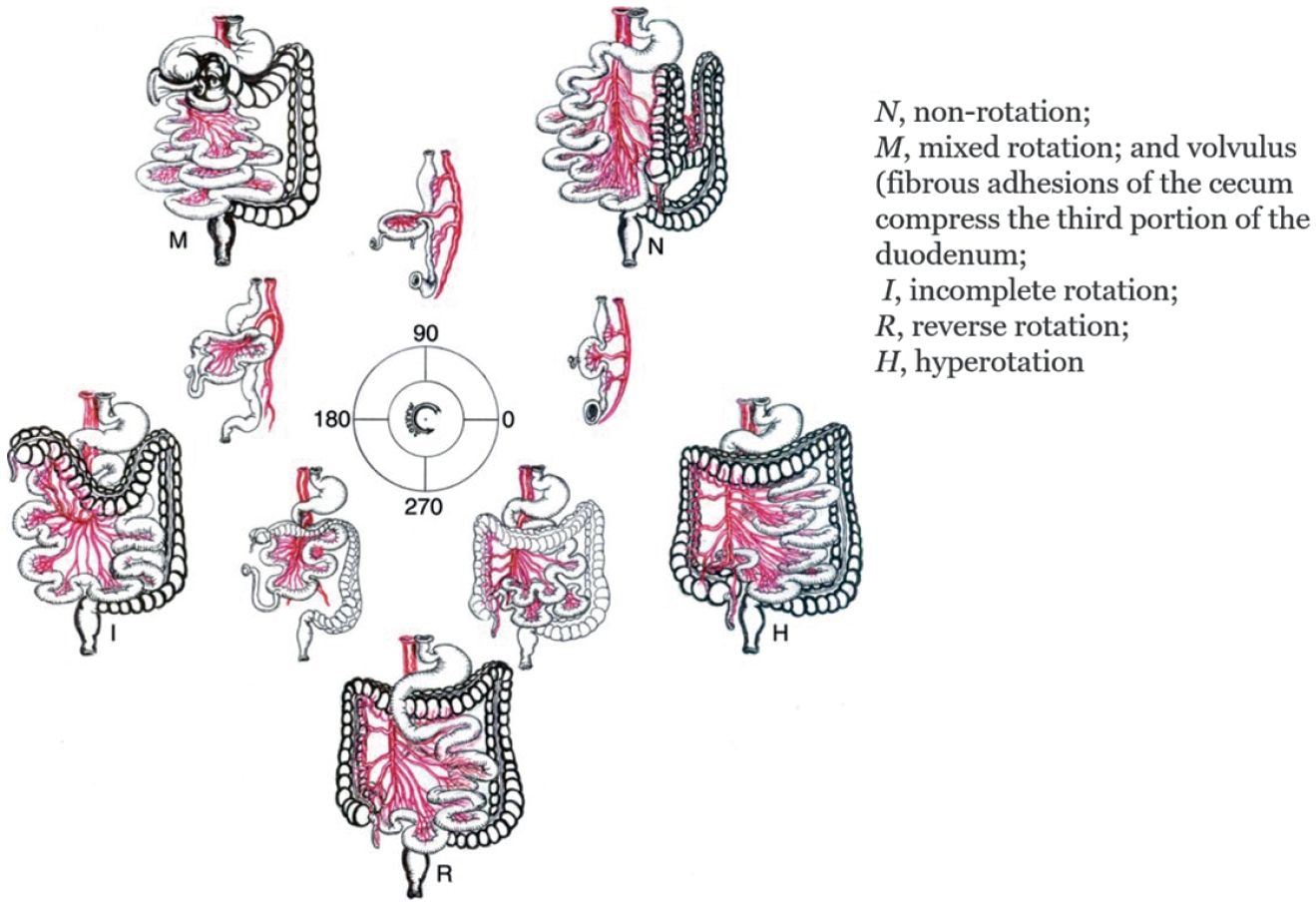
To report the findings of a perception survey on intestinal malrotation conducted by the Korean Association of Pediatric Surgeons (KAPS) in 2021.
Methods
The perceptions on intestinal malrotation regarding clinical decision making of the KAPS members were collected through web-based survey.
Results
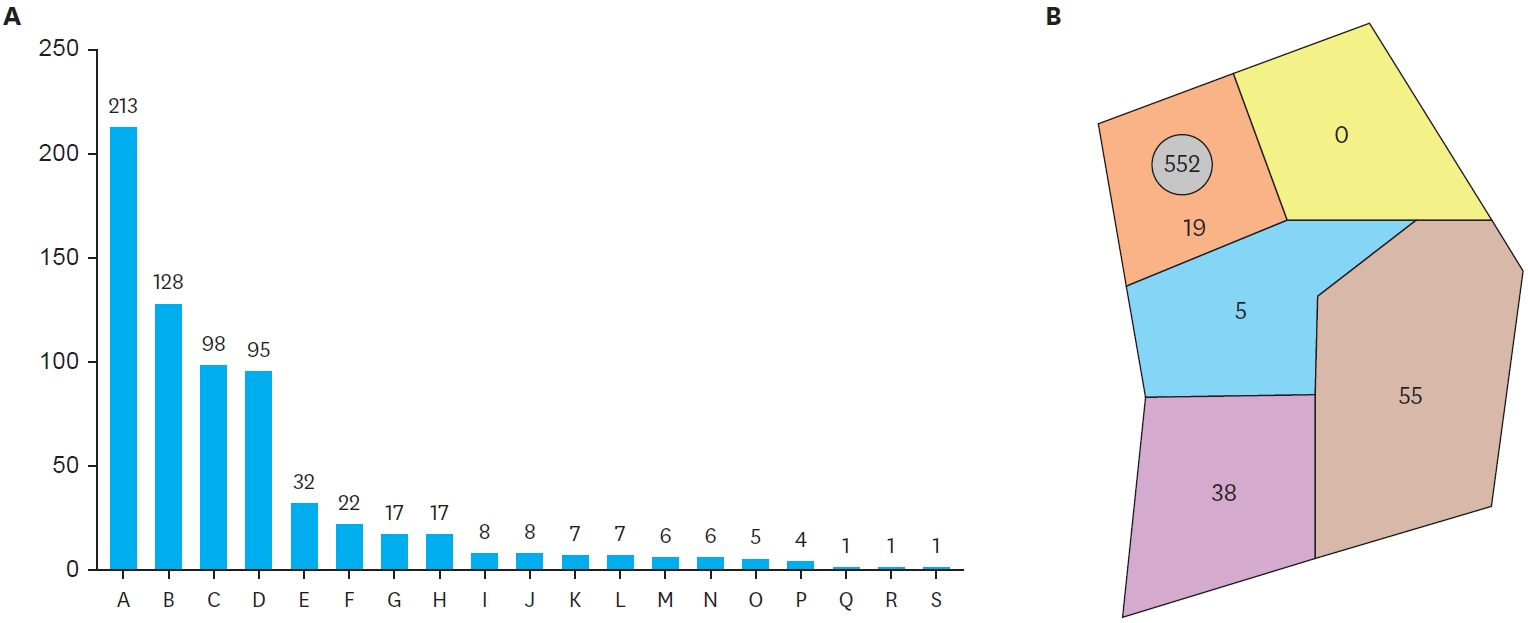
A total of 22 surgeons were answered for this study. The results were presented and discussed at the 37th annual meeting of KAPS, which was held in Seoul on June 18, 2021.
Conclusion
This study provides the clinical decisions of the KAPS members on the intestinal malrotation. The study is expected to be an important reference for improving pediatric surgeons’ understanding and treatment of intestinal malrotation.
  • 28 View
  • 2 Download
[English]
Comparative Analysis of National Surveys of Intestinal Atresia: A Retrospective Study by the Korean Association of Pediatric Surgeons
Jinyoung Park, Dayoung Ko, Eun-jung Koo, Hyunhee Kwon, Ki Hoon Kim, Dae Yeon Kim, Seong Chul Kim, Soo-Hong Kim, Wontae Kim, HaeYoung Kim, Hyun-Young Kim, So Hyun Nam, Jung-Man Namgoong, Junbeom Park, Taejin Park, Min-Jung Bang, Jeong-Meen Seo, Ji-Young Sul, Joonhyuk Son, Joohyun Sim, Soo Min Ahn, Hee-Beom Yang, Jung-Tak Oh, Chaeyoun Oh, Joong Kee Youn, Sanghoon Lee, Ju Yeon Lee, Kyong Ihn, Hye Kyung Chang, Yeon Jun Jeong, Eunyoung Jung, Jae Hee Chung, Min Jeong Cho, Yun-Mee Choe, Seok Joo Han, In Geol Ho, Jeong Hong
Adv Pediatr Surg 2025;31(1):8-15.   Published online May 28, 2025
DOI: https://doi.org/10.13029/aps.2025.31.1.8
Purpose
This study aims to investigate and compare the incidence, demographic characteristics, clinical manifestations, preoperative diagnostic methods, anatomical classifications, associated anomalies, operative treatments, and postoperative outcomes of patients with intestinal atresia treated by the members of the Korean Association of Pediatric Surgeons (KAPS) through three nationwide surveys.
Methods
KAPS conducted 3 national surveys in 1998, 2010, and 2024 to examine the patients diagnosed with intestinal atresia. In preparation for the survey, we developed a customized case registration form to obtain data on patient sex, birth weight, gestational age, clinical manifestations, preoperative diagnostic methods, anatomical types, associated anomalies, operative treatments, and postoperative outcomes. Authorized KAPS members completed the case registration form.
Results
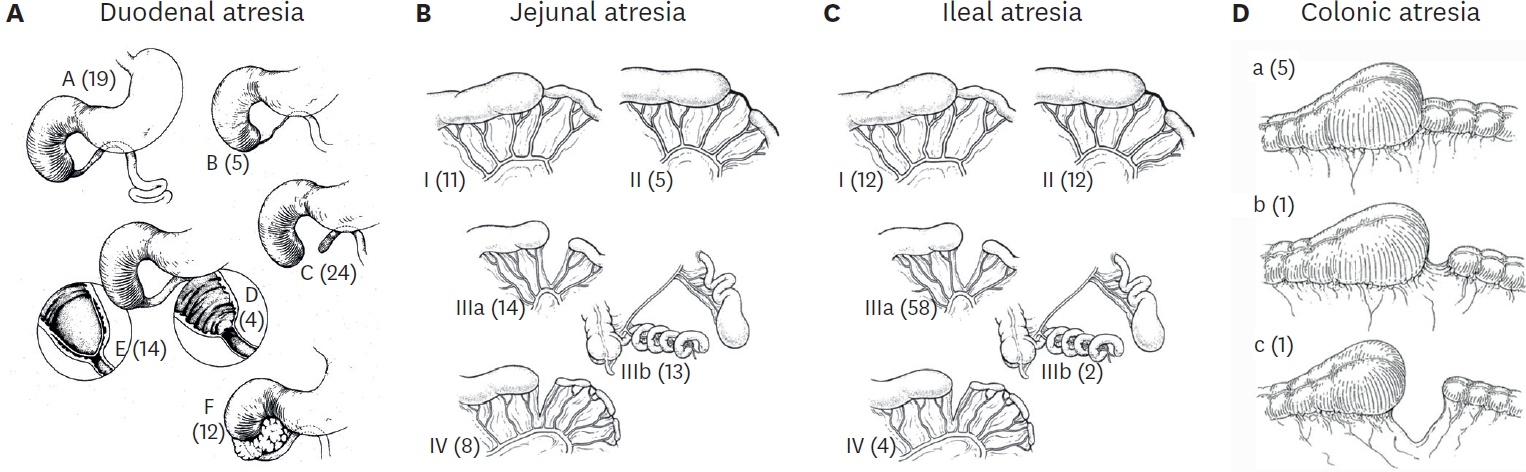
The first, second, and third national surveys included 218, 222, and 236 individuals diagnosed with intestinal atresia, respectively. The male-to-female ratios were 1.5:1, 1.1:1, and 1.1:1, respectively. The first, second, and third national surveys revealed that 34.3%, 43.3%, and 53.4% of patients were born before 37 weeks of gestation, respectively. Additionally, 28.7%, 32.0%, and 40.7% of patients had a birth weight under 2,500 g. In the third national survey, duodenoduodenostomy was the most common procedure, performed in 70 out of 82 patients diagnosed with duodenal atresia. Resection and anastomosis were the main surgical procedures conducted in 47 out of 54 cases of jejunal atresia and 74 out of 92 cases of ileal atresia. The mortality rates in the first, second, and third national surveys were 13.8%, 3.6%, and 1.3% respectively, with the lowest rate observed in the third national survey.
Conclusion
These national surveys offer valuable insights into the current state of intestinal atresia, including specific surgical interventions and postoperative outcomes in South Korea. For pediatric surgeons aiming to enhance their understanding of intestinal atresia and its treatment options, these surveys could be an indispensable resource and guide.
  • 28 View
  • 2 Download
[English]
Comparative Analysis of Two National Surveys on Esophageal Atresia With or Without Tracheoesophageal Fistula: A Retrospective Study by the Korean Association of Pediatric Surgeons
Jinyoung Park, Dae Yeon Kim, Seong Chul Kim, Hyun-Young Kim, So Hyun Nam, Jeong-Meen Seo, Jung-Tak Oh, Myung-Duk Lee, Suk-Koo Lee, Soo Min Ahn, Hye Kyung Chang, Sung Eun Jung, Yeon Jun Jeong, Eunyoung Jung, Jae Hee Chung, Yong Hoon Cho, Soon Ok Choi, Seung Hoon Choi, Yun Mee Choe, Seok Joo Han, Jeong Hong, Nam-Hyuk Lee
Adv Pediatr Surg 2024;30(1):1-8.   Published online May 31, 2024
DOI: https://doi.org/10.13029/aps.2024.30.1.1
Purpose
The Korean Association of Pediatric Surgeons (KAPS) conducts annual nationwide surveys on various aspects of pediatric surgical diseases, with the results being discussed during KAPS’s annual spring meetings.
Methods
KAPS conducted two national surveys, in 1995 and 2016, to investigate esophageal atresia (EA) with or without tracheoesophageal fistula (TEF). The authors analyzed data from these surveys to identify differences or changes in the annual occurrence, demographic characteristics, clinical presentation, preoperative diagnostic methods, anatomical type, associated anomalies, surgical treatment, and postoperative outcomes among patients with EA/TEF treated by KAPS members.
Results
The first and second national surveys included 148 and 211 patients with EA/TEF, respectively. Excessive salivation was the most prevalent clinical symptom in both surveys. Type C was the most common form of EA/TEF in both surveys. The first survey included 126 patients, all of whom underwent open surgery. In the second survey, 152 (78.4%) of 194 patients underwent open surgery, while 34 (17.5%) underwent thoracoscopic surgery. Primary esophageal repair was performed on 96 (76.2%) of 126 patients in the first survey and on 160 (82.5%) of 194 patients in the second survey. Anastomotic strictures developed in 21.4% and 32.5% of patients, anastomotic leakage in 22.2% and 10.3%, recurrent fistula in 2.4% and 4.2% during the first and second surveys, respectively. The respective survival rates for group A were 90.2% and 98.3% in the first and second surveys. For group B, the rates were 73.9% and 98.1%, and for group C, they were 34.5% and 68.1%, respectively, according to the Waterston classifications.
Conclusion
These nationwide surveys provide comprehensive information on the status, detailed treatment, and outcomes for Korean pediatric patients with EA/TEF. They are anticipated to be an invaluable resource and guide for pediatric surgeons seeking to expand their knowledge on EA/TEF and its treatment options.
  • 55 View
  • 3 Download
[English]
Sacrococcygeal Teratoma: A Survey by the Korean Association of Pediatric Surgeons in 2018
Jung-Tak Oh, Hye Kyung Chang, Min Jeong Cho, Yong Hoon Cho, Soo Jin Na Choi, Yoon Mi Choi, Jae Hee Chung, Sang Young Chung, Jeong Hong, Seok Joo Han, Yeon Jun Jeong, Eunyoung Jung, Kyuhwan Jung, Dae Youn Kim, Hae-Young Kim, Hyun-Young Kim, Ki Hoon Kim, Sang Youn Kim, Seong Chul Kim, Seong Min Kim, Soo-Hong Kim, Jong-In Lee, Myung-Duk Lee, Nam-Hyuk Lee, Suk-Koo Lee, So Hyun Nam, Jin Young Park, Kwi-Won Park, Tae-Jin Park, Jeong-Meen Seo, Jae Ho Shin, Jiyoung Sul
Adv Pediatr Surg 2019;25(2):35-43.   Published online December 18, 2019
DOI: https://doi.org/10.13029/aps.2019.25.2.35
Purpose

The Korean Association of Pediatric Surgeons (KAPS) performed a nationwide survey on sacrococcygeal teratoma in 2018.

Methods

The authors reviewed and analyzed the clinical data of patients who had been treated for sacrococcygeal teratoma by KAPS members from 2008 to 2017.

Results

A total of 189 patients from 18 institutes were registered for the study, which was the first national survey of this disease dealing with a large number of patients in Korea. The results were discussed at the 34th annual meeting of KAPS, which was held in Jeonju on June 21–22, 2018.

Conclusions

We believe that this study could be utilized as a guideline for the treatment of sacrococcygeal teratoma to diminish pediatric surgeons' difficulties in treating this disease and thus lead to better outcomes.

  • 10 View
  • 0 Download

Case Reports

[English]
Double H-type Tracheoesophageal Fistulae: A Case Report
Joohyun Sim, Jeong Hong
Adv Pediatr Surg 2018;24(2):94-99.   Published online December 3, 2018
DOI: https://doi.org/10.13029/aps.2018.24.2.94

We present an extremely rare case with double H-type tracheoesophageal fistulae identified with a time-lapse and repaired separately. A newborn male presented with cyanosis after breastfeeding. Contrast esophagogram demonstrated an H-type fistula, and then it was repaired in a standard fashion via right thoracotomy. When routine esophagogram was taken on postoperative day 10, another fistula was noticed at a level higher than the previous one. Bronchoscopy was performed to evaluate the lesion whether it was a recurred fistula or a second H-type fistula. However, it was so tiny that it was not visible with bronchoscopy. It was discovered only two months later when the fistula had grown up with the baby. The second H-type fistula was repaired through a cervical incision. Although double H-type fistulae are extremely rare, the possibility of another fistula, as well as recurrence, must be ruled out when symptom recurs after a definitive operation of an H-type fistula.

  • 10 View
  • 0 Download
[English]
Prenatally Diagnosed Gastric Duplication -Case report-
Ki-Kwan Kang, Jeong Hong
J Korean Assoc Pediatr Surg 2012;18(1):35-40.   Published online June 30, 2012
DOI: https://doi.org/10.0000/jkaps.2012.18.1.35

Gastric duplication is a rare anomaly which account for only 3.8% of all gastrointestinal duplication. Gastric duplications are usually cysticlesion without communication with lumen. Most frequent presentation is an abdominal mass with vomiting, mainly diagnosed within the first year of life. Surgical removal is necessary in all cases, and optimal timing for surgery is the time that diagnosis is made. However, prenatally diagnosed gastric duplication is getting more common, and determining timing for surgery is not easy due to absent or minimal symptoms just after birth. We experienced prenatally diagnosed gastric duplication in a female newborn baby that gastric duplication was suggested in 24th week of gestational age through prenatal ultrasonogram. Surgical removal was done at 3 months after birth, and showed good results. We think that natural history of gastric duplication and prevalent age of surgical disease which is similar to gastric duplication such infantile hypertrophic pyloric stenosis should be considered when timing of surgery on prenatally gastric duplication is decided.

  • 5 View
  • 0 Download

Original Article

[English]
Trend (in 2005) of Repair of Inguinal Hernia in Children in Korea : A National Survey by the Korean Association of Pediatric Surgeons in 2005
Seong Min Kim, Dae Yeon Kim, Sang Yoon Kim, Seong Chul Kim, Woo Ki Kim, Jae Eok Kim, Jae Chun Kim, Kwi Won Park, Jeong Meen Seo, Young Tack Song, Jung Tak Oh, Nam Hyuk Lee, Doo Sun Lee, Yong Soon Chun, Sang Young Chung, Eul Sam Chung, Kum Ja Choi, Soon Ok Choi, Seok Joo Han, Young Soo Huh, Jeong Hong, Seung Hoon Choi
J Korean Assoc Pediatr Surg 2006;12(2):155-166.   Published online December 31, 2006
DOI: https://doi.org/10.13029/jkaps.2006.12.2.155

Inguinal hernia is the most common disease treated by the pediatric surgeon. There are several controversial aspects of management 1)the optimal timing of surgical repair, especially for preterm babies, 2)contralateral groin exploration during repair of a clinically unilateral hernia, 3)use of laparoscope in contralateral groin exploration, 4)timing of surgical repair of cord hydrocele, 5)perioperative pain control, 6)perioperative management of anemia. In this survey, we attempted to determine the approach of members of KAPS to these aspects of hernia treatment. A questionnaire by e-mail or FAX was sent to all members. The content of the questionnaire were adapted from the “American Academy of Pediatrics (AAP) Section on Surgery hernia survey revisited (J Pediatr Surg 40, 1009-1014, 2005)”. For full-term male baby, most surgeons (85.7 %) perform an elective operation as soon as diagnosis was made. For reducible hernia found in ex-preterm infants already discharged from the neonatal intensive care unit (NICU), 76.2 % of surgeons performed an elective repair under general anesthesia (85.8 %). 42.9 % of the surgeons performed the repair just before discharge. For same-day surgery for the ex-premature baby, the opinion was evenly divided. For an inguinal hernia with a contralateral undescended testis in a preterm baby, 61.9 % of surgeons choose to ‘wait and see’ until 12 month of age. The most important consideration in deciding the timing of surgery of inguinal hernia in preterm baby was the existence of bronchopulmonary dysplasia (82.4 %), episode of apnea/bradycardia on home monitoring (70.6 %). Most surgeons do not explore the contralateral groin during unilateral hernia repair. Laparoscope has not been tried. Most surgeons do not give perioperative analgesics or blood transfusion.

  • 6 View
  • 0 Download

Case Reports

[English]
Surgical Experience with Pull-through Operation in Hirschsprung's Disease of the Descending Colon
Jeong Hong
J Korean Assoc Pediatr Surg 2004;10(1):60-62.   Published online June 30, 2004
DOI: https://doi.org/10.13029/jkaps.2004.10.1.60

Leveling colostomy with a frozen-section biopsy in a Hirschsprung's disease is an important factor for a successful procedure. Two neonatal cases of Hirschsprung's disease in the descending colon are reported. In both cases, loop ileostomy was established because of the unavailability of frozen-section biopsy on an emergency basis. At the time of definitive procedure of the first case, transition zone at the splenic flexure was noted and was compatible with the frozen section biopsy. In the second case, an unexpected longer resection at a higher level than transition zone was required because of the poor vascularity after dissection. In conclusion, a leveling colostomy should be selected as a choice in long-segment Hirschsprung's disease. Confirming preservation of the marginal artery of Drummond is particularly important in case of Hirschsprung's disease in the descending colon.

  • 4 View
  • 0 Download
[English]
Giant Mesenteric Lipoma: a Case Report
Su Yun Choi, Hong Kim, Jeong Hong
J Korean Assoc Pediatr Surg 2004;10(1):47-51.   Published online June 30, 2004
DOI: https://doi.org/10.13029/jkaps.2004.10.1.47

Visceral lipoma originating from the mesentery is very rare in childhood. A 29-month-old male presented with painless abdominal distension. Abdominal ultrasonography and CT revealed a huge multilobulated hypodense mass in the peritoneal cavity. Exploratory laparotomy showed a 26 × 25 × 5 cm sized encapsulated, lobulated, homogenous mass, which originated from the transverse mesocolon. Histologic examination revealed a lipoma. The postoperative course was uneventful.

  • 6 View
  • 0 Download
[English]
Transection of Distal Common Bile Duct by Bike Handlebar in a Child
Jeong Hong
J Korean Assoc Pediatr Surg 2003;9(1):52-55.   Published online June 30, 2003
DOI: https://doi.org/10.13029/jkaps.2003.9.1.52

A 10-year-old boy was admitted with blunt abdominal trauma by bike handle injury. The patient was operated upon for a generalized peritonitis due to pancreaticoduodenal injury. On opening the peritoneal cavity, complete transection of distal end of common bile duct and, partial separation between pancreas head and second portion of duodenum were found. Ligation of the transected end of the common bile duct, T-tube choledochostomy, and external drainage were performed. A pseudocyst was found around the head portion of the pancreas on the 7th postoperative day with CT. An internal fistula had developed between the pseudocyst and ligated common bile duct. The pseudocyst was subsided after percutaneous drainage. In the case of the undetermined pancreatic injury, percutaneous external drainage can be effective in treating the traumatic pancreatic pseudocyst in a pediatric patient.

  • 7 View
  • 0 Download