

Skip to main navigation Skip to main content
  • KAPS
  • E-Submission

APS : Advances in Pediatric Surgery

OPEN ACCESS
ABOUT
BROWSE ARTICLES
EDITORIAL POLICY
FOR CONTRIBUTORS

Page Path

15
results for

"Yeon Jun Jeong"

Article category

Keywords

Publication year

Authors

Funded articles

"Yeon Jun Jeong"

Original Articles

[English]
Neuroblastoma: A 2020 Survey Conducted by the Korean Association of Pediatric Surgeons
Hee-Beom Yang, Soo Min Ahn, Min Jeng Cho, Yong-Hoon Cho, Soo Jin Na Choi, Yoon Mi Choi, Jae Hee Chung, Seok Joo Han, In Geol Ho, Jeong Hong, Kyong Ihn, Yeon Jun Jeong, Eunyoung Jung, Dae Youn Kim, Hae-Young Kim, Ki Hoon Kim, Seong Chul Kim, Soo-Hong Kim, Eun-Jung Koo, Hyun Hee Kwon, Yong Jae Kwon, Nam-Hyuk Lee, Ju Yeon Lee, Sanghoon Lee, Jung-Man Namgoong, Chaeyoun Oh, Jung-Tak Oh, Jin Young Park, Junbeom Park, Jeong-Meen Seo, Jae Ho Shin, Hyun Beak Shin, Joohyun Sim, Jiyoung Sul, Joon Kee Youn, Hyun-Young Kim
Adv Pediatr Surg 2025;31(2):66-76.   Published online November 25, 2025
DOI: https://doi.org/10.13029/aps.2025.31.2.66
Purpose
To report a nationwide survey on neuroblastoma conducted by the Korean Association of Pediatric Surgeons (KAPS) in 2020.
Methods
The clinical data of pediatric patients diagnosed with and treated for neuroblastoma from 2005 to 2019 in 19 hospitals of KAPS members were collected. Survival and prognostic factor analyses were performed using the log rank test and Cox proportional hazard analysis. A p-value <0.05 was considered significant.
Results
A total of 669 patients with neuroblastoma were registered for the study. The results were presented and discussed at the 36th annual meeting of the KAPS, which was held in Seoul on August 21, 2020.
Conclusion
This study provides information on patient demographics, prognostic outcomes, and comprehensive treatment outcomes for neuroblastoma. The study is expected to be an important reference for improving pediatric surgeons’ understanding and treatment of neuroblastoma.
  • 266 View
  • 10 Download
[English]
A Comparative Study of Three National Surveys on Biliary Atresia by the Korean Association of Pediatric Surgeons
Yeon Jun Jeong, Dayoung Ko, Hyunhee Kwon, Ki Hoon Kim, Dae Yeon Kim, Soo-Hong Kim, Wontae Kim, Hae-Young Kim, Hyun Young Kim, Seong Chul Kim, Younghyun Na, Jung-Man Namgoong, So Hyun Nam, Junbeom Park, Jinyoung Park, Tae-Jun Park, Jeong-Meen Seo, Ji-Young Sul, Joonhyuk Son, Hyun Beak Shin, Joohyun Sim, Soo Min Ahn, Hee Beom Yang, Jung-Tak Oh, Chaeyoun Oh, Joong Kee Youn, Sanghoon Lee, Ju Yeon Lee, Kyong Ihn, Hye Kyung Chang, Eunyoung Jung, Jae Hee Chung, Yu Jeong Cho, Yun Mee Choe, Soo Jin Na Choi, Seok Joo Han, In Geol Ho, Ji-Won Han
Adv Pediatr Surg 2025;31(2):47-58.   Published online July 16, 2025
DOI: https://doi.org/10.13029/aps.2025.31.2.47
Purpose
Biliary atresia (BA) is a rare but progressive cholangiopathy and the leading cause of pediatric liver transplantation worldwide. The Korean Association of Pediatric Surgeons (KAPS) has conducted three national surveys (2001, 2011, and 2023) to assess long-term trends in the diagnosis, treatment, and outcomes of BA. This study provides a comparative analysis of the 2nd and 3rd national surveys, with reference to selected findings from the 1st survey.
Methods
This study included 453 patients from the 3rd national survey (2011–2021) and 435 patients from the 2nd survey (2001–2010), all of whom underwent Kasai portoenterostomy. Data were collected via electronic case report forms from pediatric surgical centers nationwide. Comparisons were made regarding demographics, clinical features, diagnostic patterns, operative details, follow-up outcomes, and survival. Kaplan–Meier analysis was used to evaluate long-term survival.
Results
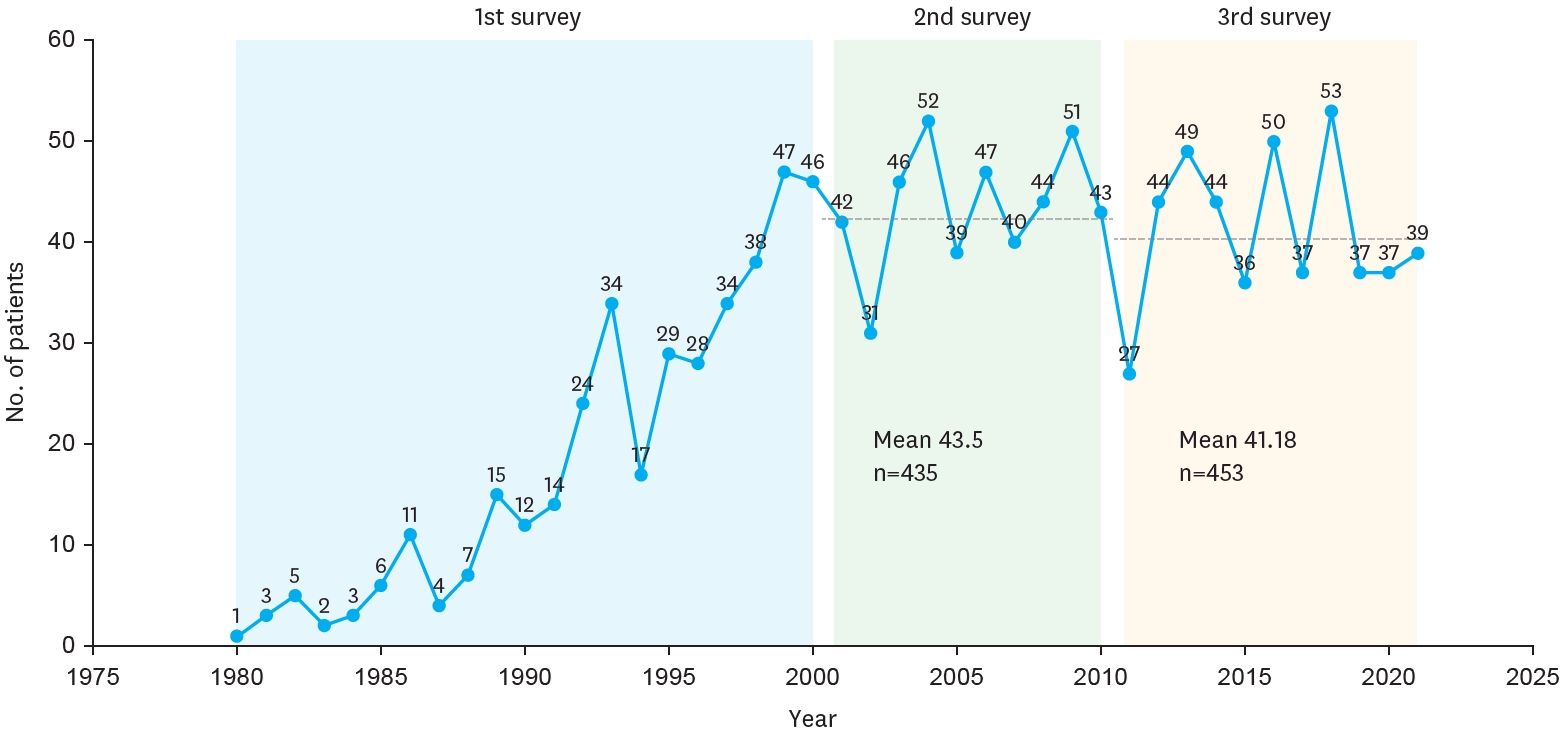
The mean number of BA patients per year remained stable between surveys (43.5 in the 2nd, 41.18 in the 3rd), though centralization of care increased, with 61.5% of cases managed by two major institutions in the 3rd survey. The median age at surgery decreased, and the use of preoperative imaging (especially magnetic resonance cholangiopancreatography) increased. The 10-year native liver survival rate declined from 59.8% to 53.7%, while overall 10-year survival improved slightly (92.9% to 93.2%). Postoperative complications, such as cholangitis and liver failure, persisted but were better categorized. The 3rd survey also reported improved mortality (4.9%) and reduced follow-up loss (11.5%) compared to the 2nd survey.
Conclusion
While overall survival after Kasai operation has remained high and even improved, native liver survival has slightly declined. The findings reflect earlier diagnosis, more consistent diagnostic imaging, and increasing centralization of care. These trends underscore the importance of long-term nationwide data collection in guiding future strategies for BA management in Korea.
  • 284 View
  • 8 Download
[English]
Comparative Analysis of National Surveys of Intestinal Atresia: A Retrospective Study by the Korean Association of Pediatric Surgeons
Jinyoung Park, Dayoung Ko, Eun-jung Koo, Hyunhee Kwon, Ki Hoon Kim, Dae Yeon Kim, Seong Chul Kim, Soo-Hong Kim, Wontae Kim, HaeYoung Kim, Hyun-Young Kim, So Hyun Nam, Jung-Man Namgoong, Junbeom Park, Taejin Park, Min-Jung Bang, Jeong-Meen Seo, Ji-Young Sul, Joonhyuk Son, Joohyun Sim, Soo Min Ahn, Hee-Beom Yang, Jung-Tak Oh, Chaeyoun Oh, Joong Kee Youn, Sanghoon Lee, Ju Yeon Lee, Kyong Ihn, Hye Kyung Chang, Yeon Jun Jeong, Eunyoung Jung, Jae Hee Chung, Min Jeong Cho, Yun-Mee Choe, Seok Joo Han, In Geol Ho, Jeong Hong
Adv Pediatr Surg 2025;31(1):8-15.   Published online May 28, 2025
DOI: https://doi.org/10.13029/aps.2025.31.1.8
Purpose
This study aims to investigate and compare the incidence, demographic characteristics, clinical manifestations, preoperative diagnostic methods, anatomical classifications, associated anomalies, operative treatments, and postoperative outcomes of patients with intestinal atresia treated by the members of the Korean Association of Pediatric Surgeons (KAPS) through three nationwide surveys.
Methods
KAPS conducted 3 national surveys in 1998, 2010, and 2024 to examine the patients diagnosed with intestinal atresia. In preparation for the survey, we developed a customized case registration form to obtain data on patient sex, birth weight, gestational age, clinical manifestations, preoperative diagnostic methods, anatomical types, associated anomalies, operative treatments, and postoperative outcomes. Authorized KAPS members completed the case registration form.
Results
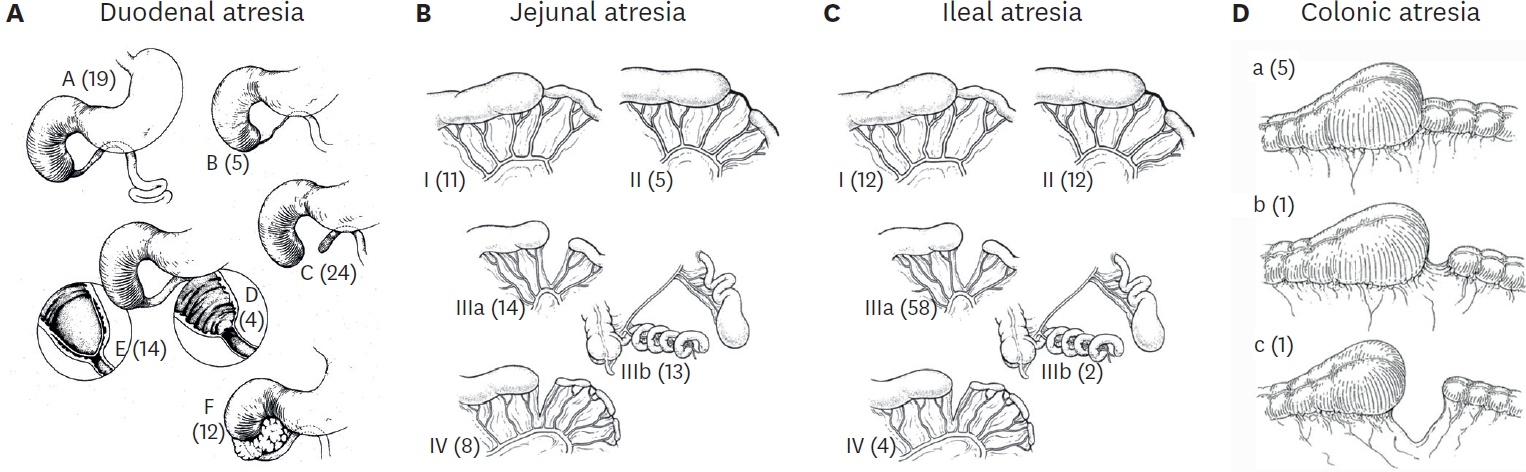
The first, second, and third national surveys included 218, 222, and 236 individuals diagnosed with intestinal atresia, respectively. The male-to-female ratios were 1.5:1, 1.1:1, and 1.1:1, respectively. The first, second, and third national surveys revealed that 34.3%, 43.3%, and 53.4% of patients were born before 37 weeks of gestation, respectively. Additionally, 28.7%, 32.0%, and 40.7% of patients had a birth weight under 2,500 g. In the third national survey, duodenoduodenostomy was the most common procedure, performed in 70 out of 82 patients diagnosed with duodenal atresia. Resection and anastomosis were the main surgical procedures conducted in 47 out of 54 cases of jejunal atresia and 74 out of 92 cases of ileal atresia. The mortality rates in the first, second, and third national surveys were 13.8%, 3.6%, and 1.3% respectively, with the lowest rate observed in the third national survey.
Conclusion
These national surveys offer valuable insights into the current state of intestinal atresia, including specific surgical interventions and postoperative outcomes in South Korea. For pediatric surgeons aiming to enhance their understanding of intestinal atresia and its treatment options, these surveys could be an indispensable resource and guide.
  • 364 View
  • 3 Download
[English]
National Survey of Gastroschisis and Omphalocele by Korean Association of Pediatric Surgeons
Yeon Jun Jeong, Dayoung Ko, Eun-Jung Koo, Hyunhee Kwon, Dae Yeon Kim, Soo-Hong Kim, Wontae Kim, Hae-Young Kim, Hyun Young Kim, Seong Chul Kim, Younghyun Na, Jung-Man Namgoong, So Hyun Nam, Sungjoo Park, Junbeom Park, Jinyoung Park, Tae-Jun Park, Jeong-Meen Seo, Ji-Young Sul, Joonhyuk Son, Hyun Beak Shin, Joohyun Sim, Jung-Tak Oh, Chaeyoun Oh, Joong Kee Youn, Sanghoon Lee, Ju Yeon Lee, Cheolgu Lee, Kyong Ihn, Eunyoung Jung, Jae Hee Chung, Yong-Hoon Cho, Yun Mee Choe, Soo Jin Na Choi, Seok Joo Han, In Geol Ho
Adv Pediatr Surg 2024;30(2):39-51.   Published online December 13, 2024
DOI: https://doi.org/10.13029/aps.2024.30.2.39
Purpose
This study provides insights into the prevalence at birth, clinical characteristics, and outcomes of gastroschisis and omphalocele in Korea over the past decade, addressing the lack of localized data despite advanced healthcare capabilities.
Methods
The study retrospectively analyzed data from 20 pediatric surgical centers in Korea from January 2012 to December 2021, including 269 patients diagnosed with gastroschisis or omphalocele. Data variables included gender, gestational age, birth weight, associated anomalies, type of defect, surgical interventions, and outcomes.
Results
The study covered 269 patients, with 80 gastroschisis and 189 omphalocele cases. Gastroschisis prevalence at birth remained stable at 2.15 per 100,000 live births, while omphalocele increased to 5.08 per 100,000. Both conditions had similar gender ratios (0.95). Gastroschisis patients had lower birth weights (2,463.90±505.50 g) and smaller head circumferences (31.97±1.86 cm) compared to omphalocele patients (2,757.65±761.24 g, 32.78±2.64 cm). Omphalocele cases had more associated anomalies, especially cardiovascular issues. Prenatal diagnosis rates were high: 93.7% for gastroschisis and 86.4% for omphalocele. About 96.3% of gastroschisis and 84.1% of omphalocele patients were born in their treatment hospitals. Gastroschisis patients underwent surgery sooner (average 3.5 days) and started feeding later (16.5 days) than omphalocele patients (average 56.5 days to surgery, 6.6 days to start feeding). Hospital stays and follow-up durations were similar, averaging around 782.6 days for gastroschisis and 800.3 days for omphalocele patients. Survival rates were 89.7% for gastroschisis and 87.1% for omphalocele.
Conclusion
The study highlights the need for early diagnosis, centralized care, and specialized surgical approaches to optimize outcomes for gastroschisis and omphalocele patients in Korea. Enhanced prenatal screening and surgical protocols are recommended to improve these patients' prognosis.
  • 307 View
  • 6 Download
[English]
Comparative Analysis of Two National Surveys on Esophageal Atresia With or Without Tracheoesophageal Fistula: A Retrospective Study by the Korean Association of Pediatric Surgeons
Jinyoung Park, Dae Yeon Kim, Seong Chul Kim, Hyun-Young Kim, So Hyun Nam, Jeong-Meen Seo, Jung-Tak Oh, Myung-Duk Lee, Suk-Koo Lee, Soo Min Ahn, Hye Kyung Chang, Sung Eun Jung, Yeon Jun Jeong, Eunyoung Jung, Jae Hee Chung, Yong Hoon Cho, Soon Ok Choi, Seung Hoon Choi, Yun Mee Choe, Seok Joo Han, Jeong Hong, Nam-Hyuk Lee
Adv Pediatr Surg 2024;30(1):1-8.   Published online May 31, 2024
DOI: https://doi.org/10.13029/aps.2024.30.1.1
Purpose
The Korean Association of Pediatric Surgeons (KAPS) conducts annual nationwide surveys on various aspects of pediatric surgical diseases, with the results being discussed during KAPS’s annual spring meetings.
Methods
KAPS conducted two national surveys, in 1995 and 2016, to investigate esophageal atresia (EA) with or without tracheoesophageal fistula (TEF). The authors analyzed data from these surveys to identify differences or changes in the annual occurrence, demographic characteristics, clinical presentation, preoperative diagnostic methods, anatomical type, associated anomalies, surgical treatment, and postoperative outcomes among patients with EA/TEF treated by KAPS members.
Results
The first and second national surveys included 148 and 211 patients with EA/TEF, respectively. Excessive salivation was the most prevalent clinical symptom in both surveys. Type C was the most common form of EA/TEF in both surveys. The first survey included 126 patients, all of whom underwent open surgery. In the second survey, 152 (78.4%) of 194 patients underwent open surgery, while 34 (17.5%) underwent thoracoscopic surgery. Primary esophageal repair was performed on 96 (76.2%) of 126 patients in the first survey and on 160 (82.5%) of 194 patients in the second survey. Anastomotic strictures developed in 21.4% and 32.5% of patients, anastomotic leakage in 22.2% and 10.3%, recurrent fistula in 2.4% and 4.2% during the first and second surveys, respectively. The respective survival rates for group A were 90.2% and 98.3% in the first and second surveys. For group B, the rates were 73.9% and 98.1%, and for group C, they were 34.5% and 68.1%, respectively, according to the Waterston classifications.
Conclusion
These nationwide surveys provide comprehensive information on the status, detailed treatment, and outcomes for Korean pediatric patients with EA/TEF. They are anticipated to be an invaluable resource and guide for pediatric surgeons seeking to expand their knowledge on EA/TEF and its treatment options.
  • 255 View
  • 5 Download
[English]
Sacrococcygeal Teratoma: A Survey by the Korean Association of Pediatric Surgeons in 2018
Jung-Tak Oh, Hye Kyung Chang, Min Jeong Cho, Yong Hoon Cho, Soo Jin Na Choi, Yoon Mi Choi, Jae Hee Chung, Sang Young Chung, Jeong Hong, Seok Joo Han, Yeon Jun Jeong, Eunyoung Jung, Kyuhwan Jung, Dae Youn Kim, Hae-Young Kim, Hyun-Young Kim, Ki Hoon Kim, Sang Youn Kim, Seong Chul Kim, Seong Min Kim, Soo-Hong Kim, Jong-In Lee, Myung-Duk Lee, Nam-Hyuk Lee, Suk-Koo Lee, So Hyun Nam, Jin Young Park, Kwi-Won Park, Tae-Jin Park, Jeong-Meen Seo, Jae Ho Shin, Jiyoung Sul
Adv Pediatr Surg 2019;25(2):35-43.   Published online December 18, 2019
DOI: https://doi.org/10.13029/aps.2019.25.2.35
Purpose

The Korean Association of Pediatric Surgeons (KAPS) performed a nationwide survey on sacrococcygeal teratoma in 2018.

Methods

The authors reviewed and analyzed the clinical data of patients who had been treated for sacrococcygeal teratoma by KAPS members from 2008 to 2017.

Results

A total of 189 patients from 18 institutes were registered for the study, which was the first national survey of this disease dealing with a large number of patients in Korea. The results were discussed at the 34th annual meeting of KAPS, which was held in Jeonju on June 21–22, 2018.

Conclusions

We believe that this study could be utilized as a guideline for the treatment of sacrococcygeal teratoma to diminish pediatric surgeons' difficulties in treating this disease and thus lead to better outcomes.

Citations

Citations to this article as recorded by  
  • Analysis of Pediatric Surgery Using the National Healthcare Insurance Service Database in Korea: How Many Pediatric Surgeons Do We Need in Korea?
    Chaeyoun Oh, Sanghoon Lee, Hye Kyung Chang, Soo Min Ahn, Kyunghee Chae, Sujeong Kim, Sukil Kim, Jeong-Meen Seo
    Journal of Korean Medical Science.2021;[Epub]     CrossRef
  • 168 View
  • 1 Download
  • 1 Crossref
[English]
Clinical Features of Varicose Vein in Pediatric Population
Seung Ju Lee, Jong Chan Lee, Hyun Beak Shin, Yeon Jun Jeong
J Korean Assoc Pediatr Surg 2016;22(2):29-32.   Published online December 22, 2016
DOI: https://doi.org/10.13029/jkaps.2016.22.2.29
Purpose

Varicose veins requiring operative treatment have been more common recently, but there are not enough studies among children dermographics because most patients belong to the adult population. We concentrated on varicose vein of under 18 years old, and here intend to report cases of our clinical experiences.

Methods

From January 2003 until December 2014, there were 6 children under 18 years old who required varicose vein management. Data was collected by the investigation of medical records retrospectively, including preoperative symptoms, diagnostic tools, treatment methods, results of treatment, and complications.

Results

The mean age was 11 years (range, 3-17 years), and gender ratio was 1:2 (2 male, 4 female). The involved legs were on the right in 3 cases, on the left in 2 cases, and on both in 1 case. The most common symptoms were venous bulging and tortuosity in 6 cases, and other symptoms were Klippel-Trenaunay-Weber syndrome in 2 cases, pain and fatigue in 1 case, port-wine stain in 1 case, and telangiectasia in 1 case. Duplex sonography was performed to confirm venous reflux in all cases. The additional venography was performed to check for anatomical variation in 1 case, and three-dimensional CT in 2 cases. Treatments were high ligation and stripping in 3 cases, and endovenous laser therapy in 3 cases. Additionally, remnant varicosities after first operations were treated by endovenous laser therapy in all cases. During the mean postoperative follow-up period of 60 months, complications included edema of the foot and petechia in 2 cases each, and were not severe.

Conclusion

Operative treatments including high ligation and stripping, and endovenous laser therapy are very effective for the management of varicose vein in the pediatric population, with improvements in quality of life including relief of symptoms and management of the cosmetic aspect.

  • 165 View
  • 0 Download
[English]
Clinical Analysis of Blunt Abdominal Trauma in Childhood
Young Yuk Kim, Yeon Jun Jeong, Sung Hoo Jung, Jae Chun Kim
J Korean Assoc Pediatr Surg 2010;16(2):177-189.   Published online December 31, 2010
DOI: https://doi.org/10.13029/jkaps.2010.16.2.177

Traumatic injury is one of the leading causes of morbidity and mortality in children. This is a clinical review of pediatric blunt abdominal trauma. A retrospective analysis of the 112 children with blunt abdominal trauma aged 15 years or less treated at the Department of Pediatric Surgery, Chonbuk National University Hospital was performed. The analysis included age, sex, injury mechanism, number and site of the injured organ, management and outcomes. The average age of occurrence was 7.6 years, and the peak age was between 6 and 8 years. There was a male preponderance with a male to female ratio of 2.3:1. The most common cause of blunt abdominal trauma was traffic accidents (61.6%), principally involving pedestrians (79.7%). The accident prone times were between 8:00 AM and 8:00 PM, the weekends (40.2%), and the winter respectively. Thirthy-five patients (31.2%) had multiple intra-abdominal organ injuries and the most common injured organ was the liver. Seventy-four cases (66.1%) were managed non-operatively and eleven cases (9.8%) expired. Of the patients who were treated surgically or were to be operated on one patient died before surgery, the remainder died during or after surgery. Risk factors such as number of injured organ, systolic and diastolic blood pressure, and trauma scores by Glasgow coma scale (GCS), Pediatric trauma score (PTS), revised trauma score (RTS), injury severe score (ISS), TRISS were significantly correlated with mortality rate.

Citations

Citations to this article as recorded by  
  • Diagnostic performance of contrast-enhanced ultrasound in traumatic solid organ injuries in children: a systematic review and meta-analysis
    Payam Jannatdoust, Parya Valizadeh, Amir Hassankhani, Melika Amoukhteh, Delaram J. Ghadimi, Mahsa Heidari-Foroozan, Paniz Sabeghi, Paniz Adli, Jennifer H. Johnston, Pauravi S. Vasavada, Ali Gholamrezanezhad
    Pediatric Radiology.2024; 55(2): 226.     CrossRef
  • 150 View
  • 0 Download
  • 1 Crossref
[English]
Effectiveness of Silk-glove Test in the Contralateral Exploration of Inguinal Hernia in Children
Bon Yong Koo, Jae Chun Kim, Yeon Jun Jeong
J Korean Assoc Pediatr Surg 2006;12(1):11-16.   Published online June 30, 2006
DOI: https://doi.org/10.13029/jkaps.2006.12.1.11

Inguinal hernia is one of the most common surgical diseases in pediatric patients. But the management of the side opposite the clinically apparent inguinal hernia, the “silent side” is controversial. Four hundred fifty-eight cases of pediatric inguinal hernias, operated by one pediatric surgeon at the Divisionof Pediatric Surgery, Department of Surgery, Chonbuk National University Hospital from January 1998 to December 2002, were reviewed retrospectively to determine the characteristics and significances of the silk-glove test on the side opposite the clinically apparent inguinal hernia. Males were preponderant as 2.8:1. Allhernias were of the indirect type and were repaired by high ligation of the sac. There were 238 (52.0%) right sided hernias, 160 (35.0%) were on the left and 60 (13.0%) were bilateral. The number of patients with a positive silk-glove sign on the contralateral side was 158(39.7%), and 133 of these had a contralateral patent processus vaginalis. Positive predictive value of Silk-glove test was 84.2% (133/158). The silk-glove test is a simple, safe, and relatively accurate method for contralateral exploration in the unilateral inguinal hernias in children.

Citations

Citations to this article as recorded by  
  • Silk Glove or Just a Pig’s Ear?
    Georgina Malakounides, Niall Jones
    Clinical Pediatrics.2014; 53(9): 896.     CrossRef
  • 127 View
  • 0 Download
  • 1 Crossref

Case Report

[English]
Torsion of Ovarian Cyst in the Fetal Period: a Case Report
Sung Hoon Yang, Yeon Jun Jeong, Jin Hyung Kim, Sung Hoo Jung, Hee Chul Yu, Jae Chun Kim
J Korean Assoc Pediatr Surg 2004;10(1):56-59.   Published online June 30, 2004
DOI: https://doi.org/10.13029/jkaps.2004.10.1.56

Ovarian cyst is found in 32% of necropsies in neonates, and can be visualized during gestation by ultrasonography. The clinical evolution of these cysts is variable, but in most cases the prognosis is favorable. Ovarian torsion, bleeding, rupture, and peritonitis have been described as complications. We report a newborn girl with torsion of ovarian cyst. A cystic mass measuring 41.9x31.9 mm on left side of abdomen was identified at 32 weeks of gestation by fetal ultrasonography. Surgery was performed after birth.

  • 85 View
  • 0 Download

Original Article

[English]
A Clinical Analysis of Complicated Gastroduodenal Ulcer in Children
Kwang Yong Jung, Yeon Jun Jeong, Chan Young Kim, Doo Hyun Yang, Jae Chun Kim
J Korean Assoc Pediatr Surg 2004;10(1):22-30.   Published online June 30, 2004
DOI: https://doi.org/10.13029/jkaps.2004.10.1.22

A total of 30 cases of the peptic ulcer in children, who underwent operations from January 1981 to December 1995 because of complications at Department of the Surgery, Chonbuk National University Medical School, is reviewed. Twenty-three were males (76.7%), 7 females (23.3%) and male was preponderant at 3.3:1. There were 25 cases (83.3%) age 10 to 15 years, 3 (10.0%) between 2 and 9 years, and 2 (6.7%) below 2. The ulcer was located at duodenum in 27 (90.0%), and at stomach in 3 cases (10.0%). Complications were perforation in 19 cases (63.3%), pyloric obstruction in 9 (30.0%) and bleeding in 2 (6.7%). For perforation, truncal vagotomy with pyloroplasty was done in 11 cases, truncal vagotomy with hemigastrectomy and gastrojejunostomy in 6, and simple closure in 2 cases. For obstruction, truncal vagotomy with hemigastrectomy and gastrojejunostomy was done in 5, and truncal vagotomy and pyloroplasty in 3 cases. For bleeding lesions, truncal vagotomy and pyloroplasty was performed in 2 cases. Ten postoperative complications developed in 9 patients; adhesive ileus in 5, recurrence in 2, pneumonia 2, and wound seroma 1 case. One patient developed a primary duodenal perforation and another a recurrent obstruction. Both of patients had symptoms for more than 3 years and were treated with truncal vagotomy and pyloroplasty for the primary operations. Hospital stay was 11.5 days for the patient with perforated ulcer, 11.0 days for the patient with pyloric obstruction, and 14.5 days for the child with bleeding. Average hospital period was 11.6 days. To reduce recurrences after operation, extensive procedure such as distal gastrectomy with vagotomy at the first operation should be considered in case with severe complication or with patients who have been symptomatic for long periods.

  • 99 View
  • 0 Download

Case Report

[English]
Adnexal Torsion Misdiagnosed as Periappendiceal Abscess in a Child
Yeon Jun Jeong, Jae Chun Kim
J Korean Assoc Pediatr Surg 2003;9(1):57-60.   Published online June 30, 2003
DOI: https://doi.org/10.13029/jkaps.2003.9.1.57

A 4-year-old female with acute lower abdominal pain was admitted with the diagnosis of periappendiceal abscess made by ultrasonography. At laparotomy, the appendix was normal, but the left ovary was twisted and necrotic. Appendectomy and left salpingo-oophorectomy were performed. The pathology of the appendix was normal, and the left tube and ovary were ischemic and had hemorrhagic necrosis. Pediatric adnexal torsion may be difficult to diagnosis clinically. Sonography is the preferred imaging study. It usually confirms a pelvic mass but may not establish the diagnosis. The correct diagnosis of adnexal torsion is often made at exploration. The most common erroneous diagnosis is acute appendicitis or periappendiceal abscess. Therapy for adnexal torsion remains controversial. While extirpation has been the standard of treatment in the past, there are current proponents of conservative therapy with adnexal sparing. Early diagnosis may lead to more frequent salvage of affected adnexa.

  • 113 View
  • 0 Download

Original Article

[English]
The Clinical Analysis of Primary Malignant Hepatic Tumor in Childhood
Ki Yun Lim, Yeon Jun Jeong, Sung Hoo Jung, Jae Chun Kim
J Korean Assoc Pediatr Surg 2003;9(1):12-18.   Published online June 30, 2003
DOI: https://doi.org/10.13029/jkaps.2003.9.1.12

The purpose of our study was to evaluate children who underwent hepatic resection for primary malignant hepatic tumor in the period from January 1994 to December 2001. A total of 8 patients, seven with hepatoblastoma (HB) and one with hepatocellular carcinoma (HCC). were studied. One HCC was respectable at the initial diagnosis, but five cases of unresectable HB received two cycles of transarterial chemoembolization (TACE) before operation. One patient with an unresectable HB with bone marrow metastasis was operated after one cycle of TACE and one cycle of systemic chemotherapy based on CCG-823F protocol. All 6 patients who underwent TACE and neoadjuvant chemotherapy showed marked redcuction in tumor volume and a clear outline of the lesion. Major complication was not noticed. Mean alpha-fetoprotei (alpha-FP) level at diagnosis, after neoadjuvant chemotherapy and after postoperative chemotherapy was 9,818 (42-35,350), 664, and 10.1 ng/mL, respectively. Half life of the alpha-FP after complete resection was 5.1 days (3.0-8.7 days). Median follow up period was 57.1 months (10-97 months) and all the patients are alive with NED. In conclusion, preoperative chemotherapy, especially TACE, is effective, safe, and useful to treat initially unresectable hepatoblastoma, and serial level of the serum alpha-FP is a useful tumor marker for diagnosis and monitoring therapeutic responses.

  • 105 View
  • 0 Download

Case Reports

[English]
Torsion of Omental Cystic Teratoma in a Child: a Case Report
Yeon Jun Jeong, Hee Chul Yu, Baik Hwan Cho, Jae Chun Kim
J Korean Assoc Pediatr Surg 2000;6(1):64-67.   Published online June 30, 2000
DOI: https://doi.org/10.13029/jkaps.2000.6.1.64

Although intraperitoneal teratomas are rare, teratomas of the greater omentuma are seldom reported. A single case of omental teratoma with torsion in a 26-month-old girl is reported. The patient presented with abdominal pain and a palpable mass. Ultrasonography and CT of the abdomen showed a large cystic mass with a non homgenious solid component composed of fat and calcification. The lesion was surgically excised. Pathology revealed a mature omental teratoma. The hospital course was uneventful.

  • 86 View
  • 0 Download
[English]
Perforation of Idiopathic Small Bowel Ulceration After Blunt Abdominal Trauma in a Child
Yeon Jun Jeong, Hee Chul Yu, Jae Chun Kim
J Korean Assoc Pediatr Surg 1999;5(2):141-145.   Published online December 31, 1999
DOI: https://doi.org/10.13029/jkaps.1999.5.2.141

Idiopathic small bowel ulceration distal to the duodenum is rare. Less than 5 % of the reported cases were in children. In the majority of the patients, a single ulcer of unknown cause is found in the jejunum or ileum. The diagnosis is difficult and usually made at the time of surgical exploration for complications, such as perforation, hemorrhage or obstruction. We treated a pediatric patient with perforation of an idiopathic ileal ulceration. The child was an ll-year-old boy who sustained blunt abdominal trauma. The involved ileal segment was resected. Pathologic findings were compatible with idiopathic small bowel ulceration. The clinical and pathological aspects of idiopathic ulcerations are discussed, and the literature reviewed.

  • 77 View
  • 0 Download