

Skip to main navigation Skip to main content
  • KAPS
  • E-Submission

APS : Advances in Pediatric Surgery

OPEN ACCESS
ABOUT
BROWSE ARTICLES
EDITORIAL POLICY
FOR CONTRIBUTORS

Page Path

5
results for

"Hyun Beak Shin"

Article category

Keywords

Publication year

Authors

Funded articles

"Hyun Beak Shin"

Original Articles

[English]
Neuroblastoma: A 2020 Survey Conducted by the Korean Association of Pediatric Surgeons
Hee-Beom Yang, Soo Min Ahn, Min Jeng Cho, Yong-Hoon Cho, Soo Jin Na Choi, Yoon Mi Choi, Jae Hee Chung, Seok Joo Han, In Geol Ho, Jeong Hong, Kyong Ihn, Yeon Jun Jeong, Eunyoung Jung, Dae Youn Kim, Hae-Young Kim, Ki Hoon Kim, Seong Chul Kim, Soo-Hong Kim, Eun-Jung Koo, Hyun Hee Kwon, Yong Jae Kwon, Nam-Hyuk Lee, Ju Yeon Lee, Sanghoon Lee, Jung-Man Namgoong, Chaeyoun Oh, Jung-Tak Oh, Jin Young Park, Junbeom Park, Jeong-Meen Seo, Jae Ho Shin, Hyun Beak Shin, Joohyun Sim, Jiyoung Sul, Joon Kee Youn, Hyun-Young Kim
Adv Pediatr Surg 2025;31(2):66-76.   Published online November 25, 2025
DOI: https://doi.org/10.13029/aps.2025.31.2.66
Purpose
To report a nationwide survey on neuroblastoma conducted by the Korean Association of Pediatric Surgeons (KAPS) in 2020.
Methods
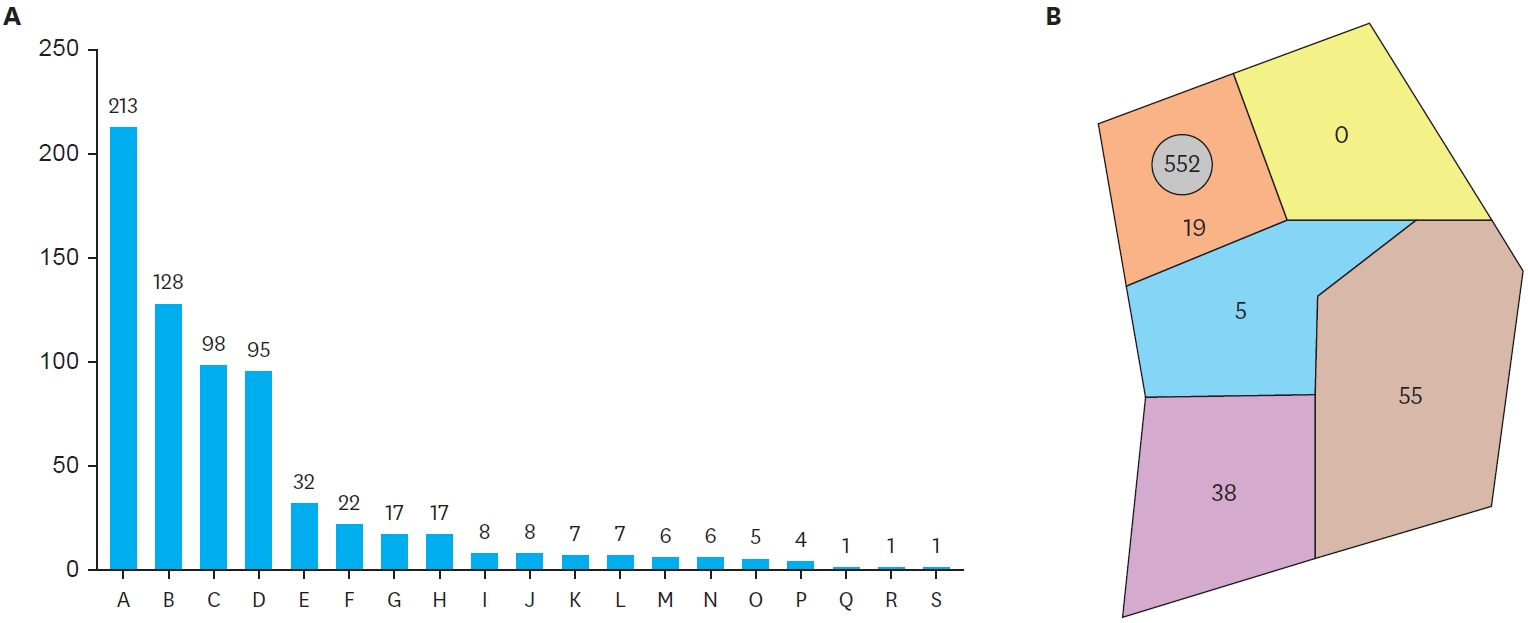
The clinical data of pediatric patients diagnosed with and treated for neuroblastoma from 2005 to 2019 in 19 hospitals of KAPS members were collected. Survival and prognostic factor analyses were performed using the log rank test and Cox proportional hazard analysis. A p-value <0.05 was considered significant.
Results
A total of 669 patients with neuroblastoma were registered for the study. The results were presented and discussed at the 36th annual meeting of the KAPS, which was held in Seoul on August 21, 2020.
Conclusion
This study provides information on patient demographics, prognostic outcomes, and comprehensive treatment outcomes for neuroblastoma. The study is expected to be an important reference for improving pediatric surgeons’ understanding and treatment of neuroblastoma.
  • 26 View
  • 2 Download
[English]
A Comparative Study of Three National Surveys on Biliary Atresia by the Korean Association of Pediatric Surgeons
Yeon Jun Jeong, Dayoung Ko, Hyunhee Kwon, Ki Hoon Kim, Dae Yeon Kim, Soo-Hong Kim, Wontae Kim, Hae-Young Kim, Hyun Young Kim, Seong Chul Kim, Younghyun Na, Jung-Man Namgoong, So Hyun Nam, Junbeom Park, Jinyoung Park, Tae-Jun Park, Jeong-Meen Seo, Ji-Young Sul, Joonhyuk Son, Hyun Beak Shin, Joohyun Sim, Soo Min Ahn, Hee Beom Yang, Jung-Tak Oh, Chaeyoun Oh, Joong Kee Youn, Sanghoon Lee, Ju Yeon Lee, Kyong Ihn, Hye Kyung Chang, Eunyoung Jung, Jae Hee Chung, Yu Jeong Cho, Yun Mee Choe, Soo Jin Na Choi, Seok Joo Han, In Geol Ho, Ji-Won Han
Adv Pediatr Surg 2025;31(2):47-58.   Published online July 16, 2025
DOI: https://doi.org/10.13029/aps.2025.31.2.47
Purpose
Biliary atresia (BA) is a rare but progressive cholangiopathy and the leading cause of pediatric liver transplantation worldwide. The Korean Association of Pediatric Surgeons (KAPS) has conducted three national surveys (2001, 2011, and 2023) to assess long-term trends in the diagnosis, treatment, and outcomes of BA. This study provides a comparative analysis of the 2nd and 3rd national surveys, with reference to selected findings from the 1st survey.
Methods
This study included 453 patients from the 3rd national survey (2011–2021) and 435 patients from the 2nd survey (2001–2010), all of whom underwent Kasai portoenterostomy. Data were collected via electronic case report forms from pediatric surgical centers nationwide. Comparisons were made regarding demographics, clinical features, diagnostic patterns, operative details, follow-up outcomes, and survival. Kaplan–Meier analysis was used to evaluate long-term survival.
Results
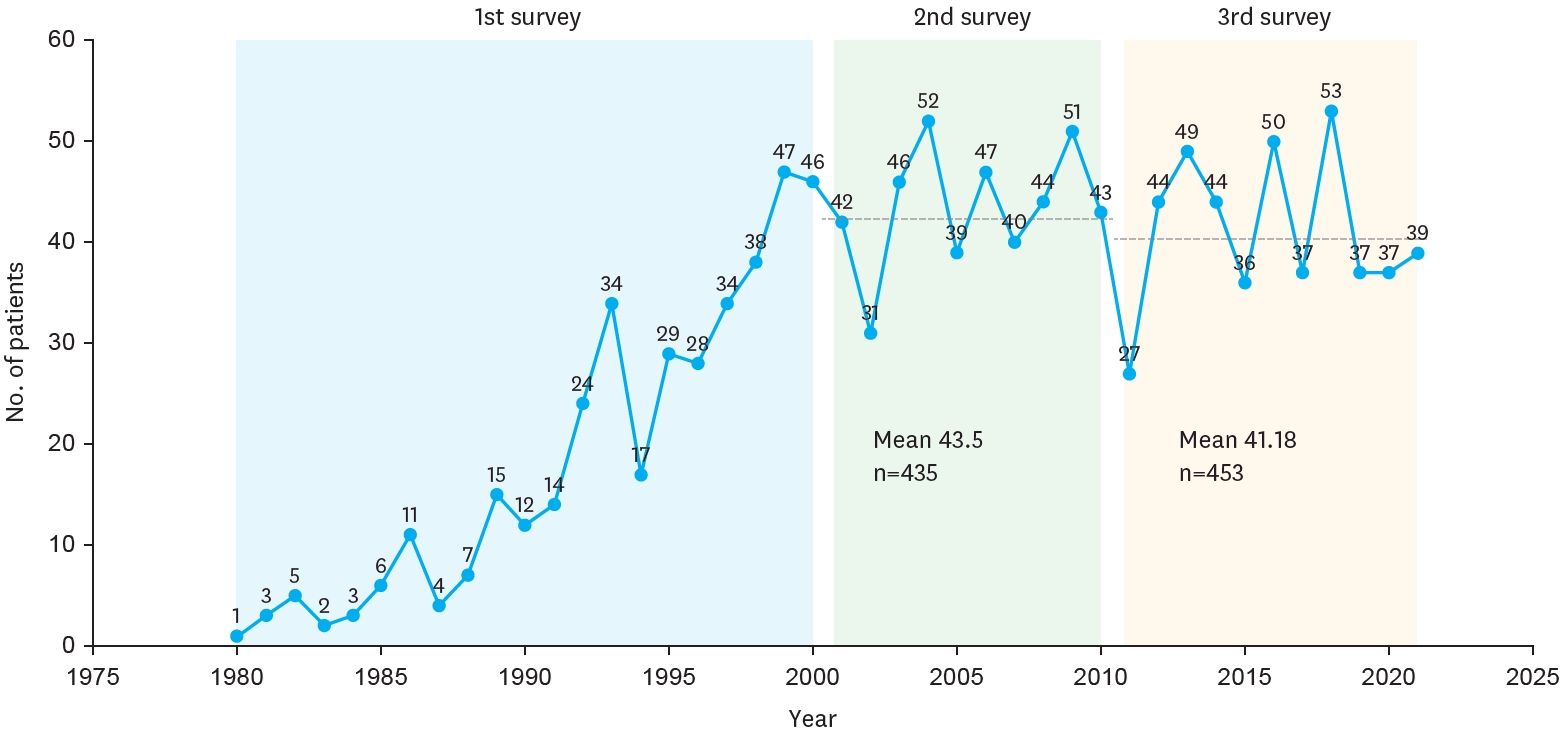
The mean number of BA patients per year remained stable between surveys (43.5 in the 2nd, 41.18 in the 3rd), though centralization of care increased, with 61.5% of cases managed by two major institutions in the 3rd survey. The median age at surgery decreased, and the use of preoperative imaging (especially magnetic resonance cholangiopancreatography) increased. The 10-year native liver survival rate declined from 59.8% to 53.7%, while overall 10-year survival improved slightly (92.9% to 93.2%). Postoperative complications, such as cholangitis and liver failure, persisted but were better categorized. The 3rd survey also reported improved mortality (4.9%) and reduced follow-up loss (11.5%) compared to the 2nd survey.
Conclusion
While overall survival after Kasai operation has remained high and even improved, native liver survival has slightly declined. The findings reflect earlier diagnosis, more consistent diagnostic imaging, and increasing centralization of care. These trends underscore the importance of long-term nationwide data collection in guiding future strategies for BA management in Korea.
  • 35 View
  • 4 Download
[English]
National Survey of Gastroschisis and Omphalocele by Korean Association of Pediatric Surgeons
Yeon Jun Jeong, Dayoung Ko, Eun-Jung Koo, Hyunhee Kwon, Dae Yeon Kim, Soo-Hong Kim, Wontae Kim, Hae-Young Kim, Hyun Young Kim, Seong Chul Kim, Younghyun Na, Jung-Man Namgoong, So Hyun Nam, Sungjoo Park, Junbeom Park, Jinyoung Park, Tae-Jun Park, Jeong-Meen Seo, Ji-Young Sul, Joonhyuk Son, Hyun Beak Shin, Joohyun Sim, Jung-Tak Oh, Chaeyoun Oh, Joong Kee Youn, Sanghoon Lee, Ju Yeon Lee, Cheolgu Lee, Kyong Ihn, Eunyoung Jung, Jae Hee Chung, Yong-Hoon Cho, Yun Mee Choe, Soo Jin Na Choi, Seok Joo Han, In Geol Ho
Adv Pediatr Surg 2024;30(2):39-51.   Published online December 13, 2024
DOI: https://doi.org/10.13029/aps.2024.30.2.39
Purpose
This study provides insights into the prevalence at birth, clinical characteristics, and outcomes of gastroschisis and omphalocele in Korea over the past decade, addressing the lack of localized data despite advanced healthcare capabilities.
Methods
The study retrospectively analyzed data from 20 pediatric surgical centers in Korea from January 2012 to December 2021, including 269 patients diagnosed with gastroschisis or omphalocele. Data variables included gender, gestational age, birth weight, associated anomalies, type of defect, surgical interventions, and outcomes.
Results
The study covered 269 patients, with 80 gastroschisis and 189 omphalocele cases. Gastroschisis prevalence at birth remained stable at 2.15 per 100,000 live births, while omphalocele increased to 5.08 per 100,000. Both conditions had similar gender ratios (0.95). Gastroschisis patients had lower birth weights (2,463.90±505.50 g) and smaller head circumferences (31.97±1.86 cm) compared to omphalocele patients (2,757.65±761.24 g, 32.78±2.64 cm). Omphalocele cases had more associated anomalies, especially cardiovascular issues. Prenatal diagnosis rates were high: 93.7% for gastroschisis and 86.4% for omphalocele. About 96.3% of gastroschisis and 84.1% of omphalocele patients were born in their treatment hospitals. Gastroschisis patients underwent surgery sooner (average 3.5 days) and started feeding later (16.5 days) than omphalocele patients (average 56.5 days to surgery, 6.6 days to start feeding). Hospital stays and follow-up durations were similar, averaging around 782.6 days for gastroschisis and 800.3 days for omphalocele patients. Survival rates were 89.7% for gastroschisis and 87.1% for omphalocele.
Conclusion
The study highlights the need for early diagnosis, centralized care, and specialized surgical approaches to optimize outcomes for gastroschisis and omphalocele patients in Korea. Enhanced prenatal screening and surgical protocols are recommended to improve these patients' prognosis.
  • 21 View
  • 3 Download

Case Report

[English]
Recurrent Congenital Milium of the Nipple
Hyun Beak Shin, Yeon-Jun Jeong
Adv Pediatr Surg 2019;25(2):60-62.   Published online December 12, 2019
DOI: https://doi.org/10.13029/aps.2019.25.2.60

Congenital milia of the nipple are extremely rare, and standard treatment has not yet been established because nipple preserving excision is problematic due to the location. Although most reports show excisional biopsy resulting in good outcomes without recurrence, there is a lack of consensus about treatment modality, with several studies suggesting that incisional evacuation by needle, or a ‘wait and see’ approach represent sufficient treatment. This case report is about a recurrent case after incisional evacuation for congenital milium of the nipple. We recommend nipple preserving excision with exfoliation of the milial capsule as being the most appropriate treatment modality for congenital milium of the nipple.

  • 10 View
  • 0 Download

Original Article

[English]
Clinical Features of Varicose Vein in Pediatric Population
Seung Ju Lee, Jong Chan Lee, Hyun Beak Shin, Yeon Jun Jeong
J Korean Assoc Pediatr Surg 2016;22(2):29-32.   Published online December 22, 2016
DOI: https://doi.org/10.13029/jkaps.2016.22.2.29
Purpose

Varicose veins requiring operative treatment have been more common recently, but there are not enough studies among children dermographics because most patients belong to the adult population. We concentrated on varicose vein of under 18 years old, and here intend to report cases of our clinical experiences.

Methods

From January 2003 until December 2014, there were 6 children under 18 years old who required varicose vein management. Data was collected by the investigation of medical records retrospectively, including preoperative symptoms, diagnostic tools, treatment methods, results of treatment, and complications.

Results

The mean age was 11 years (range, 3-17 years), and gender ratio was 1:2 (2 male, 4 female). The involved legs were on the right in 3 cases, on the left in 2 cases, and on both in 1 case. The most common symptoms were venous bulging and tortuosity in 6 cases, and other symptoms were Klippel-Trenaunay-Weber syndrome in 2 cases, pain and fatigue in 1 case, port-wine stain in 1 case, and telangiectasia in 1 case. Duplex sonography was performed to confirm venous reflux in all cases. The additional venography was performed to check for anatomical variation in 1 case, and three-dimensional CT in 2 cases. Treatments were high ligation and stripping in 3 cases, and endovenous laser therapy in 3 cases. Additionally, remnant varicosities after first operations were treated by endovenous laser therapy in all cases. During the mean postoperative follow-up period of 60 months, complications included edema of the foot and petechia in 2 cases each, and were not severe.

Conclusion

Operative treatments including high ligation and stripping, and endovenous laser therapy are very effective for the management of varicose vein in the pediatric population, with improvements in quality of life including relief of symptoms and management of the cosmetic aspect.

  • 5 View
  • 0 Download